

The first thing you notice when you slip into MISSCHEN’s Sequin Sparkly Off-Shoulder Cocktail Dress is the curious contrast of textures: a cool, slightly gritty shimmer of sequins against a surprisingly soft lining that keeps the surface from feeling abrasive on your skin. The off-shoulder band settles with a gentle, reassuring tension so the neckline stays put as you lift your arms, and the short sleeves hug the upper arm without puckering at the seams. As you stand and take a few steps the high-low hem reveals its weight — not floaty, but with a pleasant, measured sway that reads as substance rather than stiffness — and when you sit the skirt drapes forward in a clean fold, the seams lying flat where the dress meets the body.
What you notice first when the dress catches the light
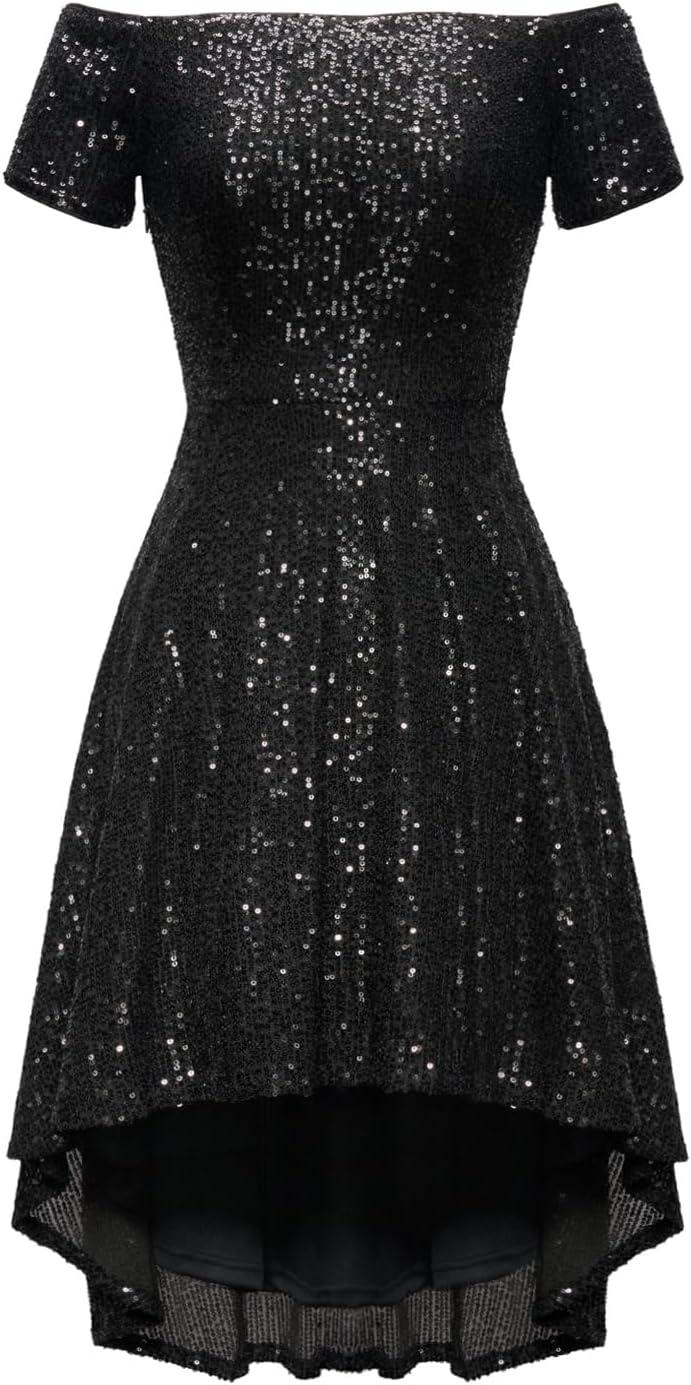
When the dress catches the light, the first thing you notice is a speedy, pinpoint shimmer that travels as you move. Tiny flashes concentrate along the neckline and across the short sleeves, breaking up into a scatter of highlights when you raise an arm or turn. The sequins read like a multitude of small mirrors—some angles throw sharp, almost metallic glints, while others fall into a softer, diffused gleam. As you walk, the high-low hem adds a trailing band of sparkle that flickers with each step rather than holding a steady shine.
Up close, the surface looks animated: individual sequins tilt and overlap, sending irregular gleams across seams and folds. You find yourself smoothing a shoulder or nudging a sleeve now and then to shift where the light lands; the effect can seem concentrated in patches rather than uniformly luminous. In dimmer, warmer lighting the dress tends to glow subtly; under direct light the same areas punch with brief, sharper reflections—an alternating rhythm that follows typical movement and posture.
What the sequin surface and the lining feel like up close
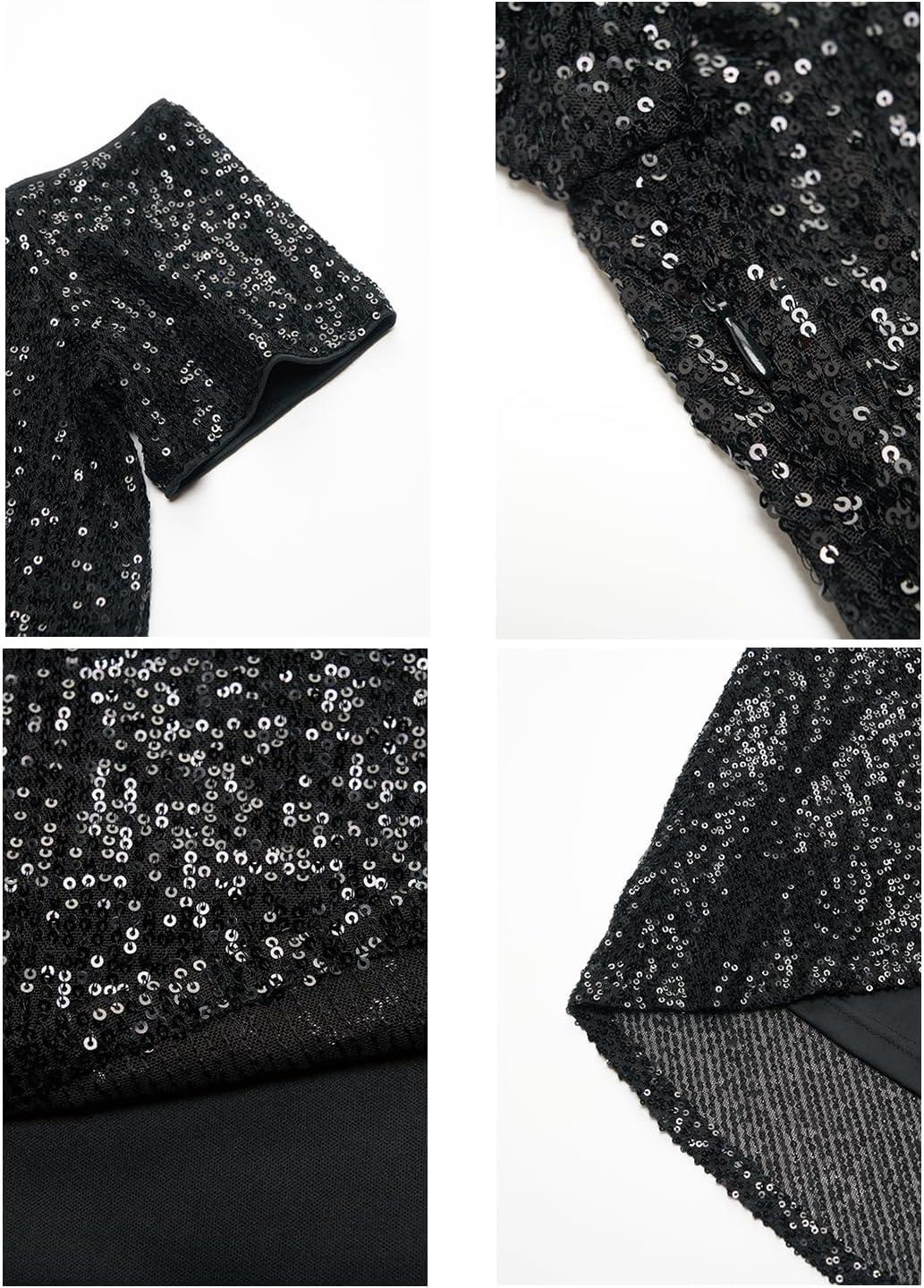
Up close,the sequin surface reads as a textured,slightly crisp shell that responds to the smallest motions. When you run a hand over the fabric the sequins lay mostly flat but their tiny overlapping edges make a faint, papery sound as they shift; smoothing the shoulder or sweeping the skirt will rearrange the sparkle in little waves. At arm-raise or when you tug at a sleeve you can feel the layer resist and then settle, and the seams where rows of sequins meet are perceptible beneath your fingertips—thin ridges that you unconsciously brush or smooth down as you move.
The lining, by contrast, feels immediately slick and close to the skin. It tends to glide under your movements, so the sequin layer and the lining sometimes move against each other and produce a soft rubbing where they overlap.Around the underarm and neckline the stitches and seam allowances are more noticeable; you may shift the off-shoulder edge or adjust a sleeve to relieve that tiny pressure. In most cases the lining keeps the sequins from sitting directly on your skin, but you can still sense the structure of the dress through that inner layer—how it follows curves, bunches slightly at the waist as you sit, and releases again when you stand.
How the off shoulder neckline and high low hem sit on your frame
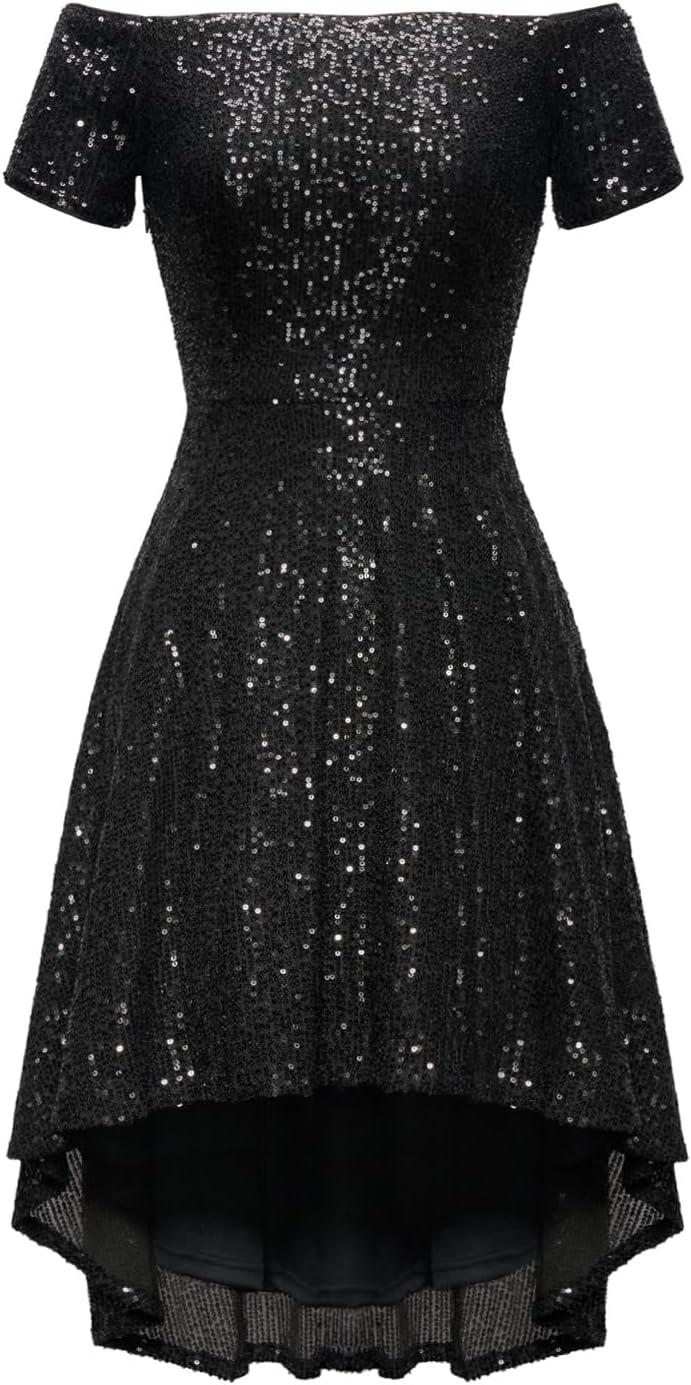
When you slip into the dress, the off-shoulder neckline settles across your upper arms and collarbone rather than up by the neck; it reads visually as a horizontal line that frames your shoulders and leaves the throat and top of the chest open. As you move, that line can shift a little — you may find yourself nudging the sleeve bands back into place after lifting your arms or reaching forward — and the edge sometimes lies flat against the skin or creates a faint fold where your shoulder meets the arm. the short sleeves rest across the upper arm and, in motion, tend to ride with the sleeve seam shifting slightly toward the back or front depending on how you hold your arms.
The high-low hem presents a steady contrast between the front and back as you stand and walk. At rest the front hem sits noticeably shorter, revealing more of the leg, while the back drapes lower and rounds or tapers behind the calves; when you take a step the skirt swings and the difference becomes more pronounced, the higher front lifting enough to show ankle and lower calf in motion. Small unconscious gestures — smoothing the skirt, shifting your weight from foot to foot — change how much of the lower leg is visible and how the sequined edge catches the light as the hemline moves.
How the dress travels with you when you walk,sit,and dance
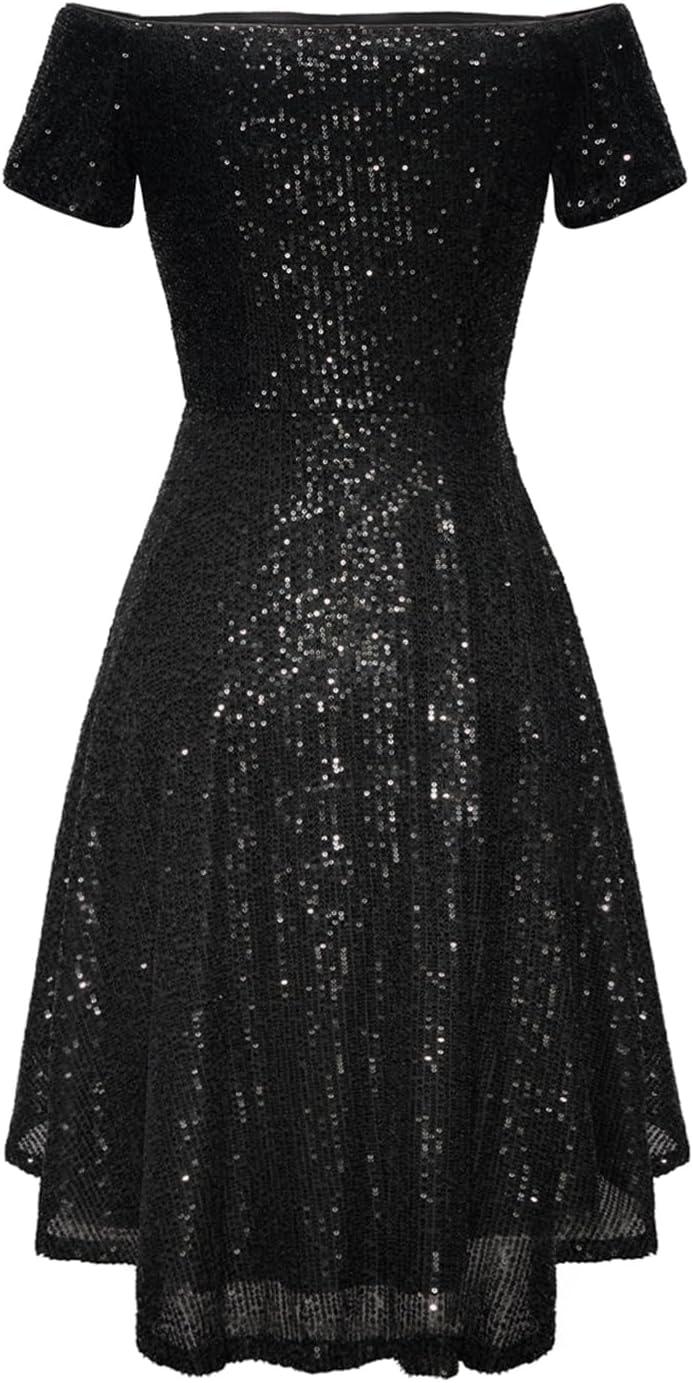
When you walk,the skirt swings in a loose,rhythmic way that follows your stride: the front rises a little with each step while the longer back drapes and brushes behind you. The sequins catch and scatter light as panels shift, producing a faint, intermittent shimmer with every turn of the hips. As you move your arms or reach for something, the off-shoulder neckline can ask for a brief, almost automatic tuck or smoothing, and the short sleeves may slide up or settle against the upper arm depending on how you hold yourself.
When you sit and when you dance, the dress behaves differently over time. Sitting makes the fabric compress and the longer back tends to pool on the chair, leaving the front more exposed; you might find yourself smoothing the skirt or nudging the hem into place without thinking about it. On the dance floor, motion exaggerates the contrast between still and moving parts: spins and quick turns send the skirt into a subtle flare and the sequins into a quick flash, while sustained movement can make certain seams shift against the body so you instinctively adjust them. Small,repeated gestures—brushing at a sleeve,easing the neckline,shifting the skirt—become part of how the dress travels with you through an evening.
How the dress performs in real occasions compared with what you might expect
In real settings the dress behaves like a showy garment that changes with light and movement rather than a static look. Under ambient, warmer lighting the sequins scatter a soft shimmer; under bright spotlights or phone flashes they produce concentrated glints that register clearly in photos. The high-low hem swings when walking, revealing more of the lower leg in motion while the longer back can drape over a chair or the edge of a booth. The off-shoulder line settles against the collarbone and occasionally requires an upward nudge to stay even; short sleeves have a tendency to ride slightly when arms are raised, and the bodice can need occasional smoothing after sitting.
Through an evening of mingling and dancing, a few practical tendencies become apparent. Sequin edges can catch light at conversational distance and create a faint rustle with movement; for some wearers, that texture feels lively, while for others it can register as persistent surface friction. When seated, the shorter front shows more leg than might first be expected and the back hem may tuck or crease depending on posture. Over several hours the neckline and sleeve placement can shift enough to prompt brief, unconscious adjustments—smoothing a shoulder, straightening a seam—rather than constant fiddling. In most cases the visual impact intensifies under flash photography and softens in low light, and small trade-offs in movement and surface texture become apparent only with extended wear.
View full specifications, sizes and colors on Amazon.
What happens to the sparkle, seams, and shape after an evening of wear
Sparkle. After an evening of moving, sitting, and the occasional readjust of the off‑shoulder neckline, you’ll notice the dress still catches light but with a lived‑in look.Areas you touch most — the shoulders as you hitch them up, the hem as you smooth it while standing — can show slightly fewer reflective flashes; a few loose sequins or specks of glitter sometimes appear on your skin or the inside of a bag. The overall shimmer softens where friction is greatest, while untouched panels retain the original shine, so the dress reads as unevenly lived‑in rather than uniformly dulled.
Seams and shape. seams tend to register the night’s activity: side seams and sleeve seams may pucker a little after repeated arm movement, and the off‑shoulder construction can shift, prompting you to hitch or smooth the neckline and briefly distort the shoulder seams. Sitting often leaves horizontal creases across the bodice and a slight flattening at the waist; the high‑low hem can skew after crossing legs or stepping, so the front and back don’t always return to their initial fall immediately. In most cases the structure bounces back after hanging or a gentle smooth, though areas under constant strain show the most visible change by the end of the night.
How the Piece Settles Into Rotation
Wearing the MISSCHEN Women’s Sequin Sparkly Glitter Off Shoulder Short Sleeve High Low Cocktail Dress in regular routines, you notice it moving from an eye-catching choice into something quietly familiar. Over time, the fit relaxes a touch and the fabric’s edges soften, and in daily wear the seams and sequins find a rhythm with your movements so comfort becomes less of a question.As it’s worn more often, the sparkle loses some of its initial sharpness and takes on a steady, companionable presence in the closet. It becomes part of rotation.

