

Teh first thing you notice is how the fabric settles against your skin — a cool,softly dense stretch that smooths rather than clings. Sliding into the Belle Poque midi pencil dress, the 3/4 sleeves and mid-calf length feel composed; seams follow your lines as you stand and ease when you sit. The skirt hangs with a modest visual weight, tipping into a clean pencil silhouette that moves with small, deliberate shifts when you walk. In those first moments the hem falls straight, the waist seam sits flat, and the garment quietly shows you where it will bend and breathe through the day.
When you first unbox the black midi pencil dress and what catches your eye
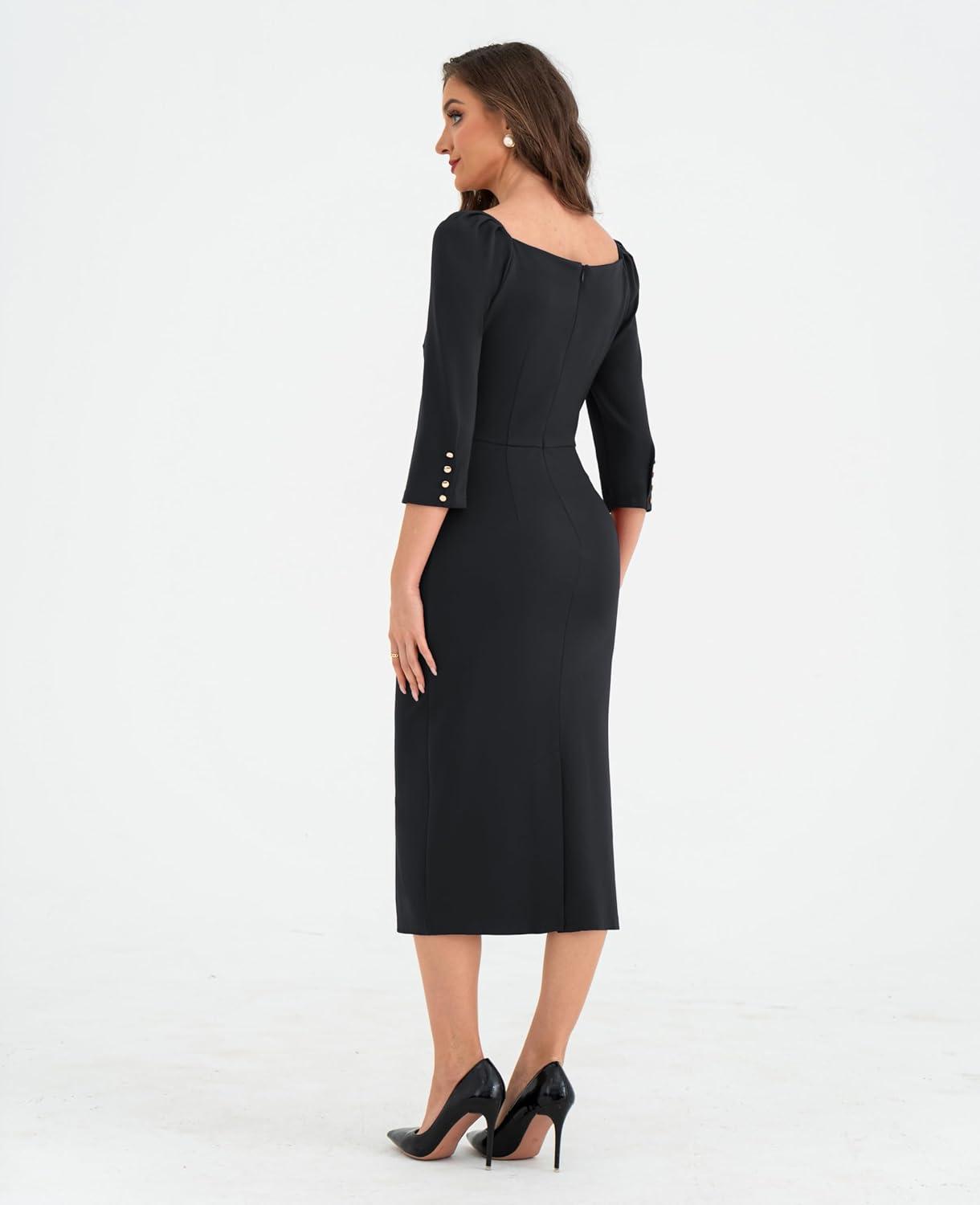
you peel back the packing and the dress slips free in a single motion, the black settling into a deep, even tone that catches the light in places and reads almost matte in others. Held up by the shoulders,the silhouette is instantly legible: a clean,narrow line through the torso and hips with a straight,mid-calf hem that suggests a tailored fall.Small details register next—the way the darts pull toward the waist, a back seam that tracks the center, and the zipper sliding down with a soft, unhurried resistance. The three-quarter sleeves look proportionate when the dress is suspended, and the neckline frames the hanger in a way that hints at how it will sit against your clavicle.
Once you step into it, attention shifts to movement. The fabric settles against your body and the pencil shape becomes more definite; you find yourself smoothing the front and tugging slightly at the sleeves,small automatic gestures that reveal where the seams want to sit. The hem grazes the lower calf and tends to stay put when you stand,but it folds and eases as you walk,emphasizing the line rather than obscuring it. Pins of stitching and the edge of the zipper catch the eye now and then—not loud, just visible where the light hits—while the overall effect is one of a composed, vertical silhouette that invites those fast, unconscious adjustments as you shift and turn.
Up close with the fabric how it drapes and how it feels against your skin when you touch it
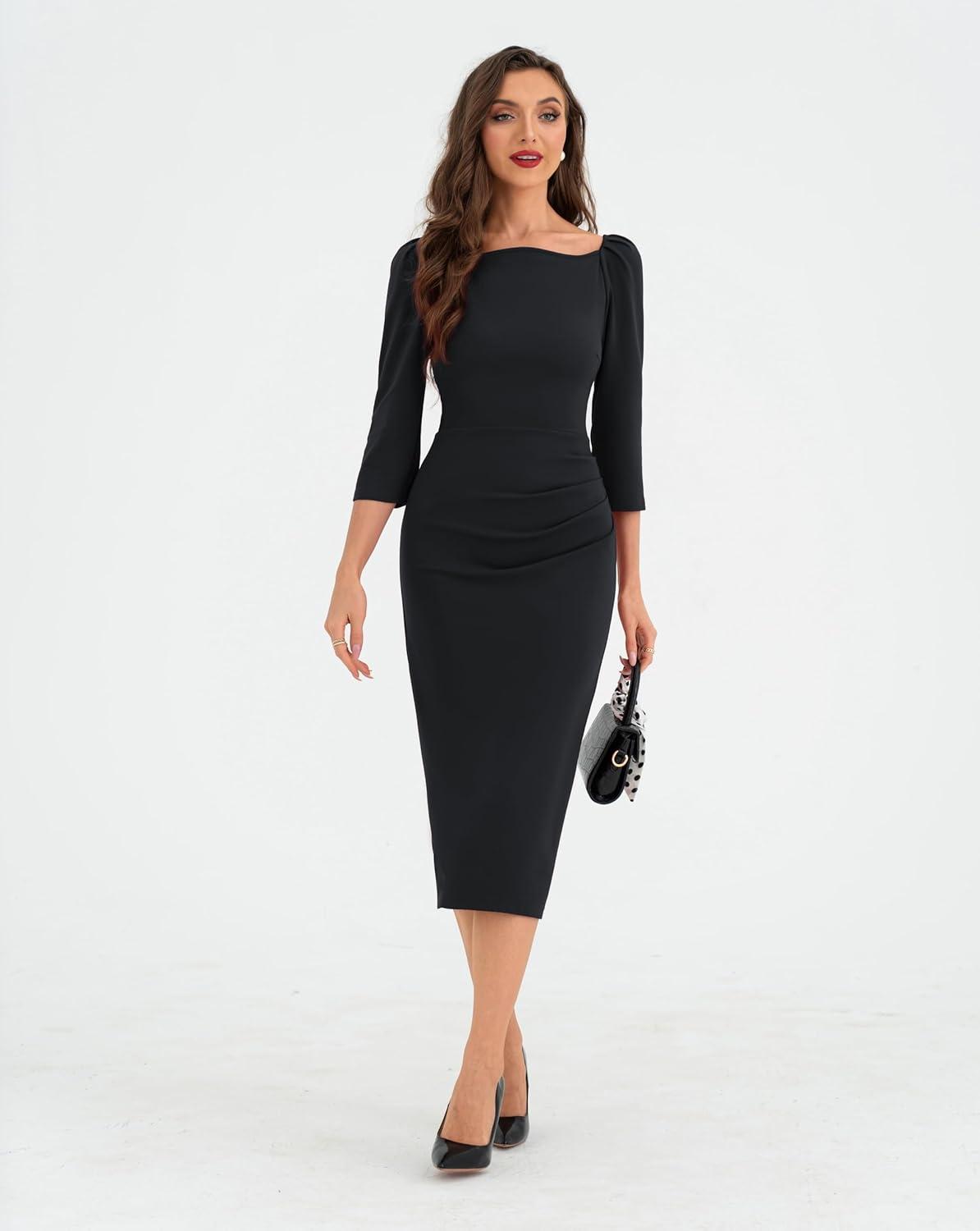
Put your hand against the fabric and you’ll notice it follows the body’s lines rather than hanging away — the skirt section creates a long, narrow silhouette that skims the hips and then settles toward your calves. As you walk the material moves with small, controlled shifts: it smooths out over a step, gathers into shallow horizontal creases behind the knees when you sit, and then relaxes again as you stand. The 3/4 sleeves lay flat along your forearms at first, though they tend to creep up an inch or two when you bend the elbow, prompting the occasional sleeve-smoothing gesture.
When you touch it, the surface feels mostly smooth with a faint, almost satiny resistance under your fingers; there’s enough give to stretch slightly, then rebound, so the fabric conforms as you move. At first contact it can feel cool, warming as it rests against skin over a few minutes. You’ll notice seams and darts as subtle ridges if you run your hand along them, and areas where the fabric presses against the body — around the waist or under the arm — can feel firmer than the flatter panels on the front. Small, unconscious adjustments (smoothing the skirt, straightening a sleeve) are common as the dress settles during wear.
Where the sheath lines land on your shoulders waist and hips when you try it on
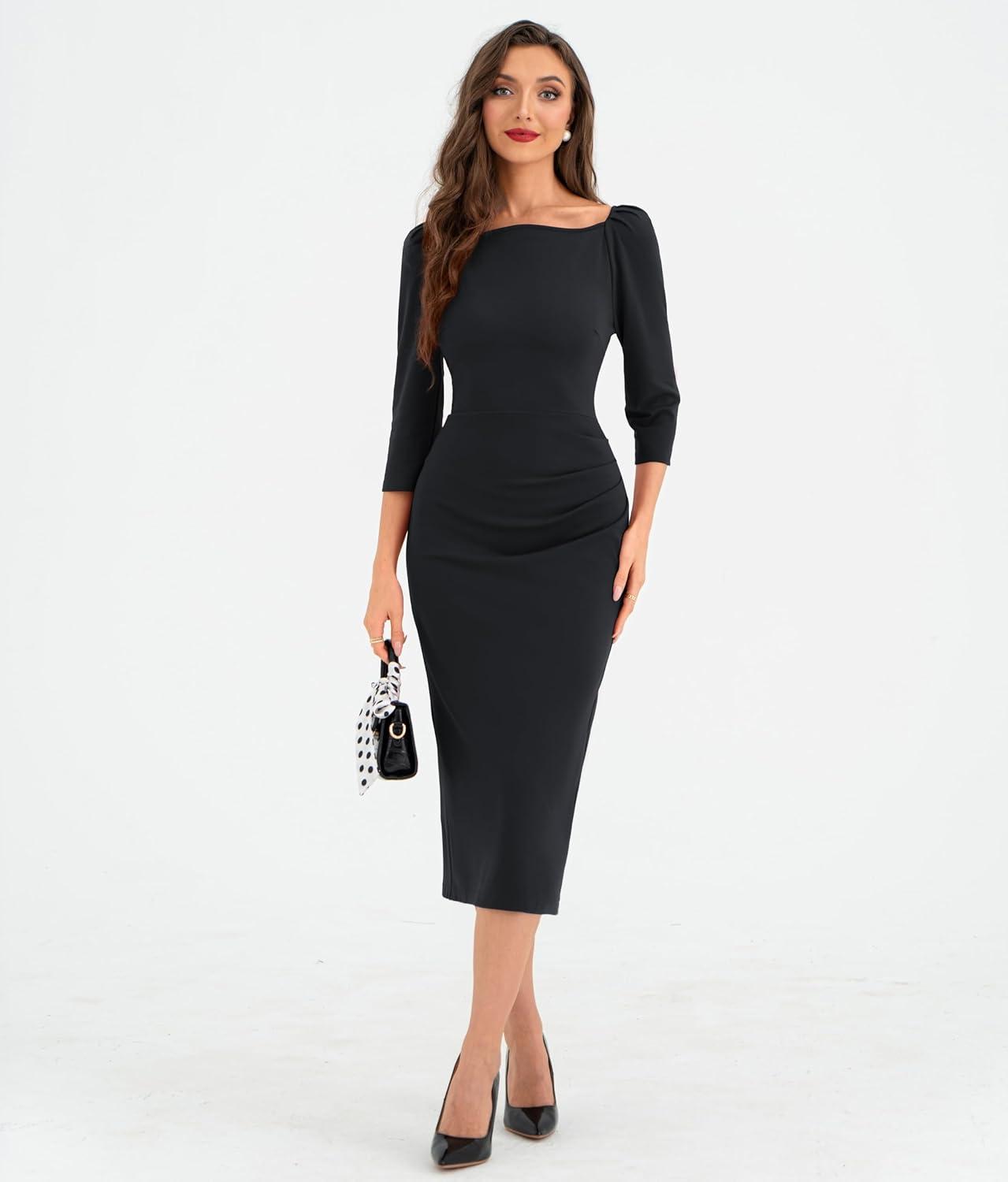
when you put the dress on, the shoulder seam usually settles right where your shoulder slope meets the arm — often at the outer edge of the bone if you’re standing naturally. The 3/4 sleeve seam and the line that runs from the shoulder down through the bodice trace a fairly straight path over your bust; when you lift your arms or reach forward those lines shift slightly, and you’ll find yourself smoothing the fabric back into place without thinking about it.
The shaping lines that nip in toward your midsection tend to converge at or just above your natural waist, creating a visible vertical channel as you move. Past that point the seams continue over the fullest part of your hips; when you walk or sit those lines can skew a little—side seams creep toward the front, the center-back seam can pull slightly upward, and the vertical contouring softens where your body bends. Taken together, the sheath’s lines read as a continuous spine from shoulder to hip, but they do show small, momentary shifts with movement and posture.
How it responds as you walk sit and reach and the sensations you notice on your body
As you walk, the skirt sways with each step and the hem brushes the lower calf in a soft, rhythmic way.You’ll notice a gentle tug at the hip seams when your stride lengthens; the fabric gives just enough to let you move,then settles back so the silhouette stays close to your body. The sleeves don’t flap or shift wildly — they track with your arms — and the shoulder seams remain put unless you shrug or reach up, at which point you might feel a brief pull across the upper back.
When you sit, the dress changes character. The front of the skirt smooths against your thighs and a faint horizontal crease appears across the lap; the fabric can feel a little taut as you lower into a chair, and you may find yourself smoothing the skirt forward or hitching it down out of habit. The pencil shape keeps the hem close to your calves, so crossing your legs or angling your knees makes the skirt ride slightly and brings more tension along the side seams. You can sometimes sense the seam lines shift under your palms if you rest your hands on your knees.
Reaching, lifting, or stretching produces small, quick sensations: a soft stretch at the bust or back, a slight resistance under the arms, and a subtle draft as the fabric shifts. The sleeves will inch up a little when you raise your arms, prompting an automatic tug to reposition them. For some movements you’ll notice the fabric pull at the zipper line or along the center back, and then relax as you return to a neutral posture.Throughout wear you may find yourself unconsciously smoothing creases, adjusting sleeve length, or realigning seams — small, repeated gestures that mark how the dress interacts with your everyday motion.
How the dress lines up with your work to evening expectations and the practical limits you encounter
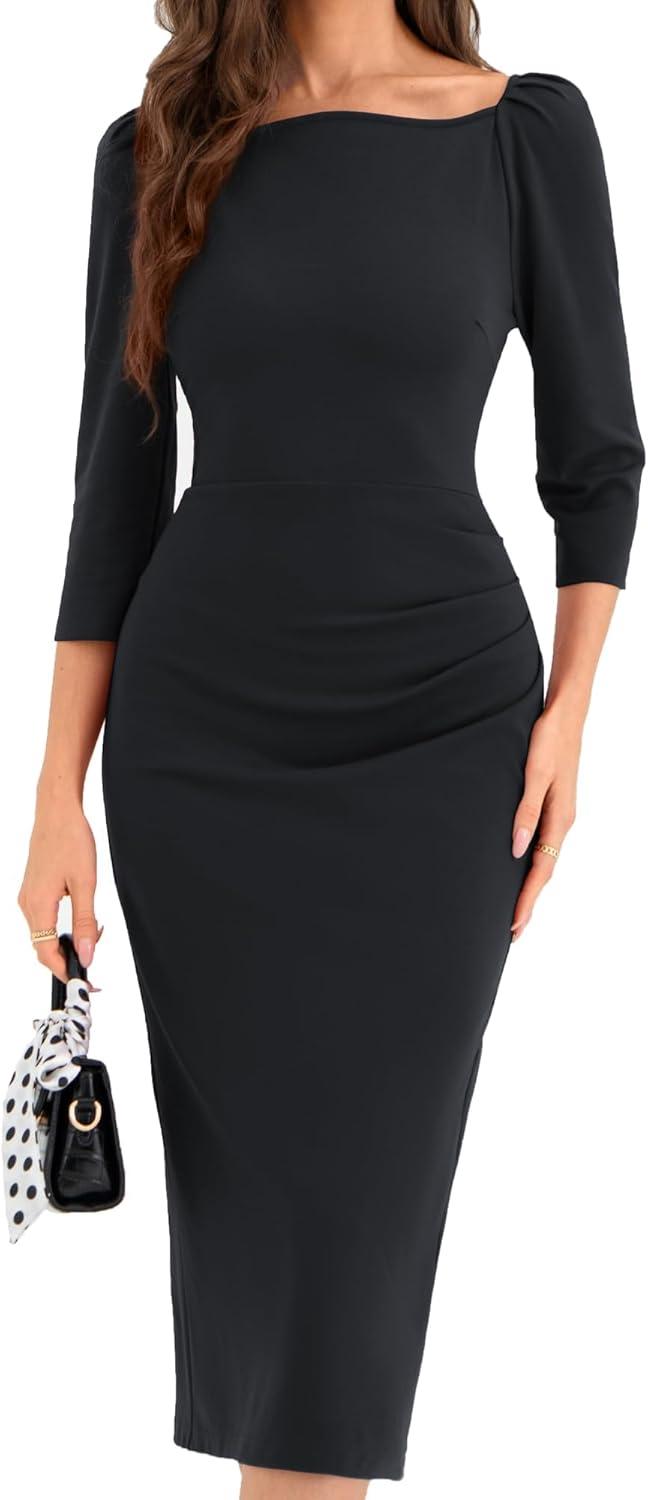
As the day shifts from desk to drinks, the dress keeps a composed, sheath-like line that generally reads as polished under office lighting and slightly more defined under evening lamps. Sitting through meetings often produces shallow creases across the lap, and the hem can ride up just enough to be noticeable when standing; sleeves tend to be nudged back during repeated typing or reaching. The overall silhouette follows bodily contours closely, so seams and underlayers become more visually present the longer it’s worn and as lighting changes.
Practical limits show up in everyday movement rather than in dramatic failures: raising the arms stretches the bodice and can shift side seams, and brisk walking or climbing stairs highlights the pencil cut’s shorter stride allowance. Over several hours the most common habits are smoothing fabric at the hips and readjusting sleeve position—small, repetitive tweaks that mark the boundary between office-appropriate structure and evening comfort needs. These are typical wear patterns observed as the garment moves through a workday into later hours.
View full specifications and available sizes/colors
How the color seams and hem behave over a long day and the care you observe for your dress
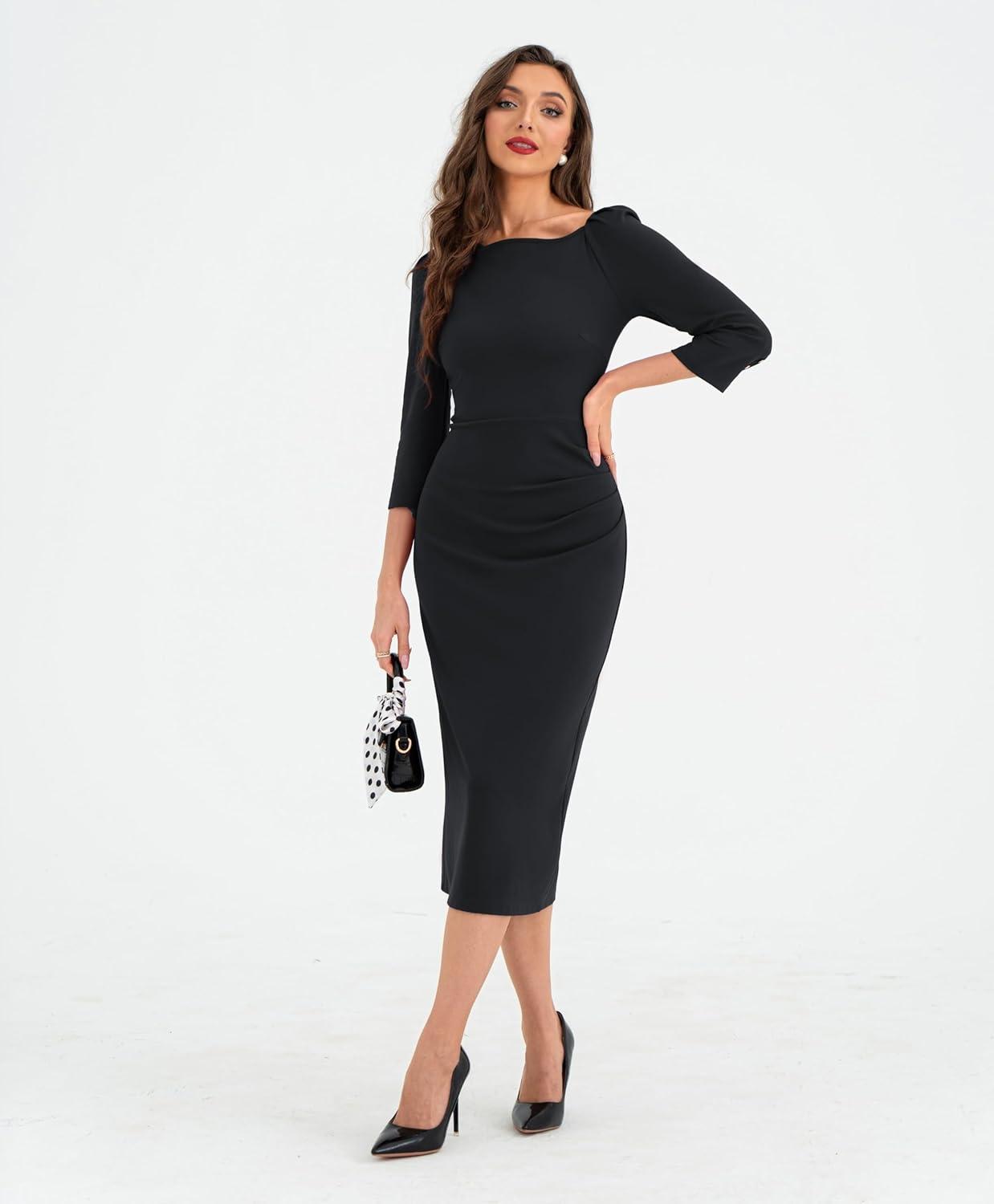
How the color, seams and hem behave over a long day
When you first put the dress on the color reads deep and even; as the hours pass you notice the tone softens slightly in high‑contact places — under your arms, along the inner thighs and where a bag strap rests.The change is subtle rather than patchy: those areas take on a faint, worn sheen and collect a little surface lint against lighter upholstery.If you smooth the fabric after sitting, the hue looks fresher again, but repeated rubbing leaves a gentle dulling where the knit bears most of the friction.
The seams mostly stay flat against your body, though you find yourself unconsciously tugging at the side seams and adjusting the sleeves after a stretch of reaching or typing. Small puckers can appear where the fabric stretches across your hips and at the sleeve head after prolonged movement, but there’s no obvious seam opening. The hem keeps its mid‑calf position for most of the day; it can creep upward a couple of inches when you sit for a long spell and then drape back down when you stand,leaving a faint crease along the sitting line. After you take it off you typically hang it up and run a hand over the seams and hem—simple smoothing removes the temporary distortions and a lint roller clears the tiny pills that show up from repeated wear.
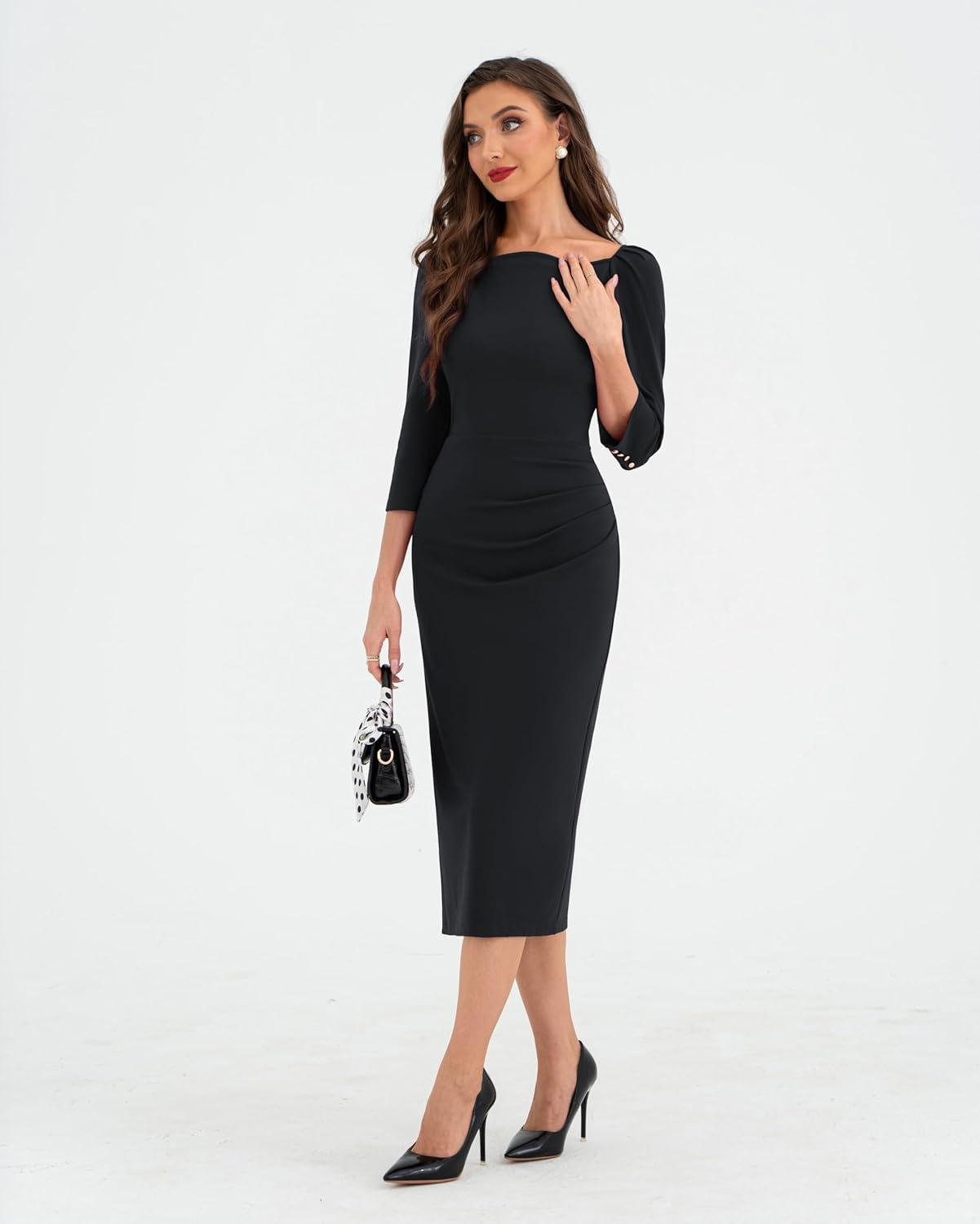
How the Piece Settles Into Rotation
After several wears, the Belle Poque Womens Midi Pencil Dresses 3/4 Sleeve Sheath Dress Vintage Cocktail Slim Dress Business Office Work Bodycon Dress, Black, 12 reads less like a new arrival and more like a familiar option in the wardrobe. In daily wear the fabric softens, comfort shifts into steadier behavior, and small signs of gentle aging smooth into the silhouette. Mornings fold around it with little thought,so it becomes an everyday presence in regular routines rather than an occasion piece. as it’s worn over time, the piece settles.

 (Balanced, ~150 chars) Belle Poque Womens Midi Pencil Dress — a sleek, professional office fit. Comfortable stretch and a timeless silhouette perfect for meetings, commutes, and workdays. 2) (Short, ~135 chars) Elevate workwear with the Belle Poque Womens Midi Pencil Dress: polished office fit, flattering midi pencil silhouette, and comfy stretch for all-day wear. 3) (CTA-focused, ~150 chars) Shop the Belle Poque Womens Midi Pencil Dress for the ultimate office fit. Flattering midi pencil dress with professional style and comfortable fabric for work. Pick the one that best matches your tone; option 1 is a safe default for CTR and relevance.)