

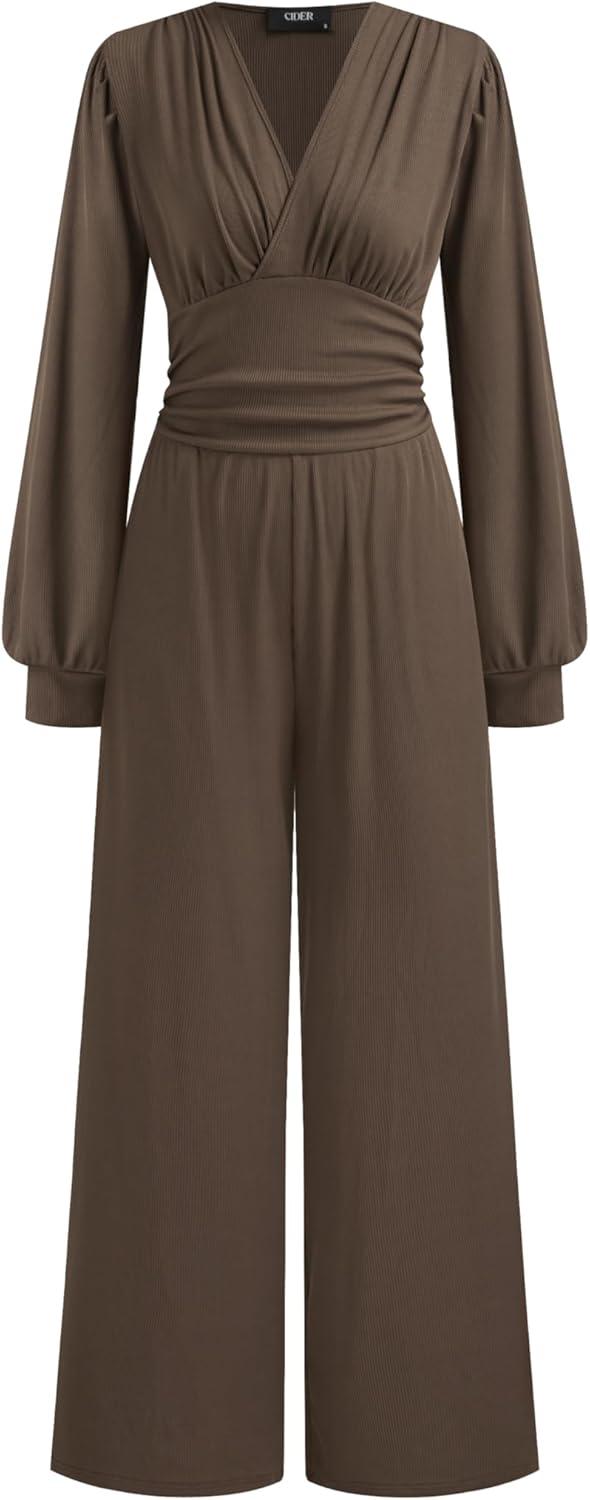
You slip into CIDER’s long-sleeve V-neck wide-leg jumpsuit and the first thing you notice is a medium-weight fabric that skims yoru body with a soft, slightly ample hand. The legs fall in wide, curtain-like panels that swing with a quiet rhythm when you walk, while the torso drapes without pulling at the seams. The long sleeves settle neatly at the shoulder and the V-neck lies flat against your chest,creating a composed silhouette that doesn’t feel stiff. Pockets sit low and mostly flat until you rest your hands in them, and when you sit the material gathers into gentle folds rather than sharp creases, revealing how the garment’s visual weight anchors its movement. Standing, stepping, or crossing your legs, small shifts in the drape keep catching your eye—nothing grabs attention, but the jumpsuit shows itself in those lived-in moments.
Your first glance on the hanger and how it reads at a distance

From across the room, the jumpsuit reads as a single, uninterrupted silhouette — a long vertical line broken only by the hint of a V at the neckline and the soft flare of the legs at the hem. The sleeves hang straight from the shoulders on the hanger, so from a distance thay suggest a clean, covered armline rather than anything fussy. The fabric drapes with a slight sway when the rack is nudged, which makes the garment look fluid rather than stiff; pockets and small details disappear into that movement until you step closer.
When you move in for a nearer look, the impression shifts a little: seams, the neckline curve and the way the legs fall become more readable, and you often find yourself smoothing a sleeve or flicking the hem to judge the drape. At that middle distance — the few steps between scanning and picking up — the jumpsuit tends to present as a simple, continuous piece with a defined vertical fall, the specifics only revealing themselves as you bring it into hand.
the fabric under your hand and the finish against your skin
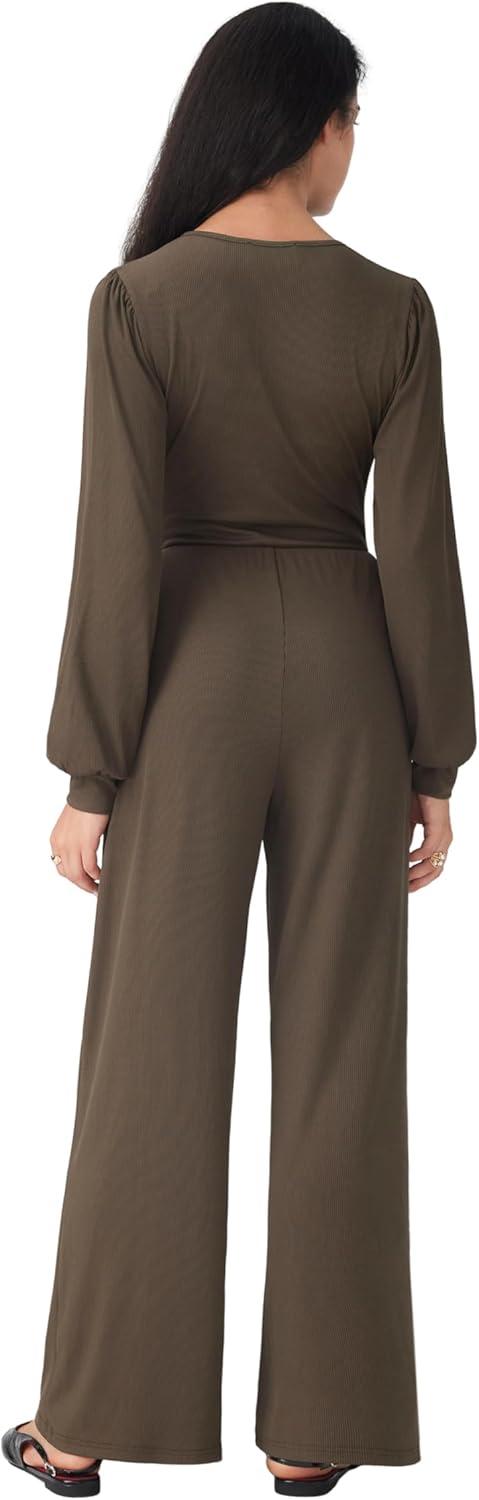
When you slide your hand across the fabric, the first impression is of a smooth, closely knit face that glides rather than drags. The surface catches light in a soft way as you move, and small, unconscious gestures—smoothing a sleeve, running fingers along a seam—are how the garment settles into place. Pockets and seams register under your palm as barely-there ridges; when you reach or sit, those lines shift and then settle again against the body.
Against your skin the finish feels cool at first,then warms with movement. The material follows your motions rather than resisting them, though at times it can cling slightly at the hips or inner thigh as you walk or cross your legs. Over the course of an hour the fabric tends to relax where it rubs—around the waist and under the arms—so you find yourself adjusting hems or smoothing stray folds now and then. small details, like the way the neckline lays against your collarbone or how the sleeve edge slides when you lift your arms, are part of the everyday experience of wearing it.
Where the cut settles on your shoulders waist and wide legs with pockets in place
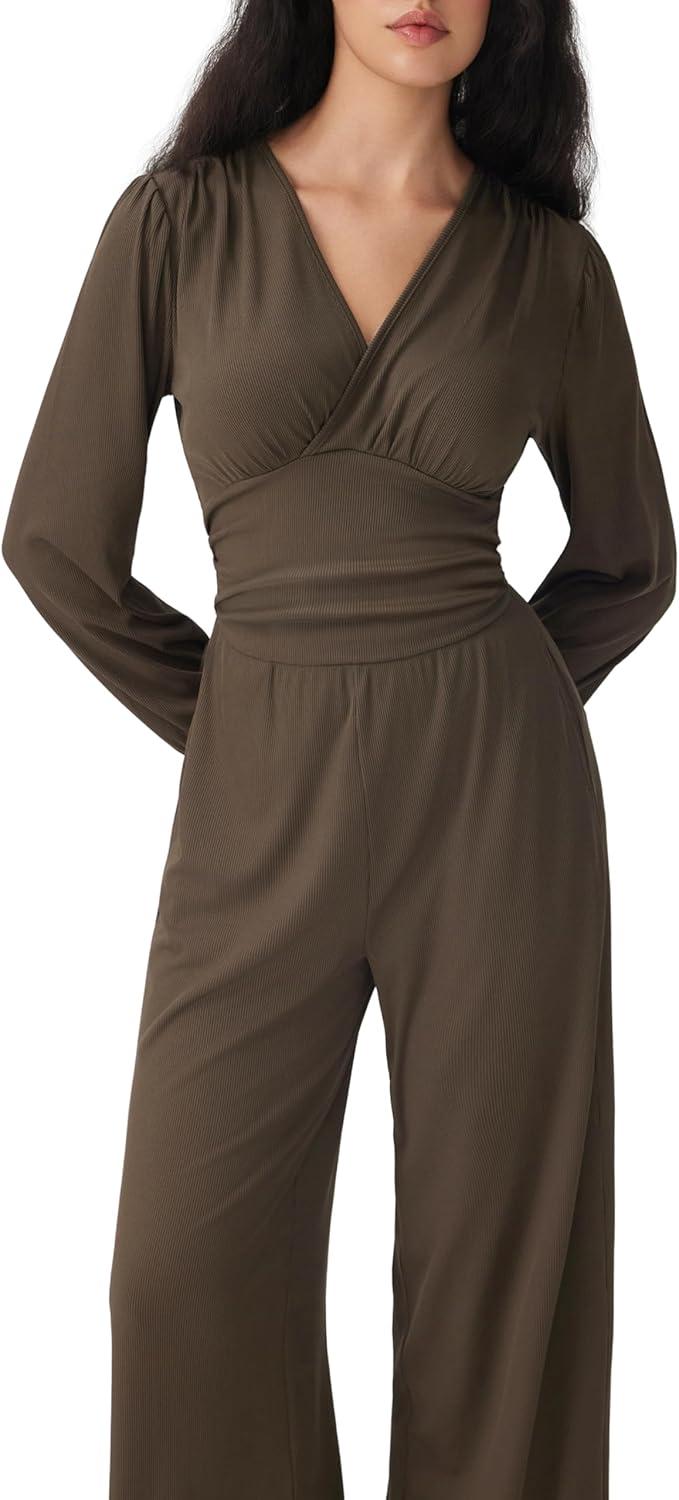
When you step into it, the shoulder seams tend to come to rest near your natural shoulder line, with the long sleeves falling straight down from that point. You’ll notice, especially in still moments, a small urge to smooth the fabric at the shoulder or tug a sleeve into place — the cut doesn’t fight much movement, so the seam can shift slightly forward as you reach or lift your arms.
at the midsection the silhouette settles into a defined waistline that sits where your torso narrows, though posture nudges that seam a little higher or lower as you move. from the hip the legs open into a wide fall that keeps its volume even when pockets are empty; once you put your hands or small items in the pockets, the added weight pulls the side seams just enough to change the hang. The pockets create a gentle outward tilt at the hip and a subtle ripple down the wide leg, and as you walk the fabric brushes and re-sets itself — you’ll find yourself smoothing the drape at the thigh or shifting a pocket’s contents without thinking.
What happens when you walk sit and lean — the jumpsuit in motion
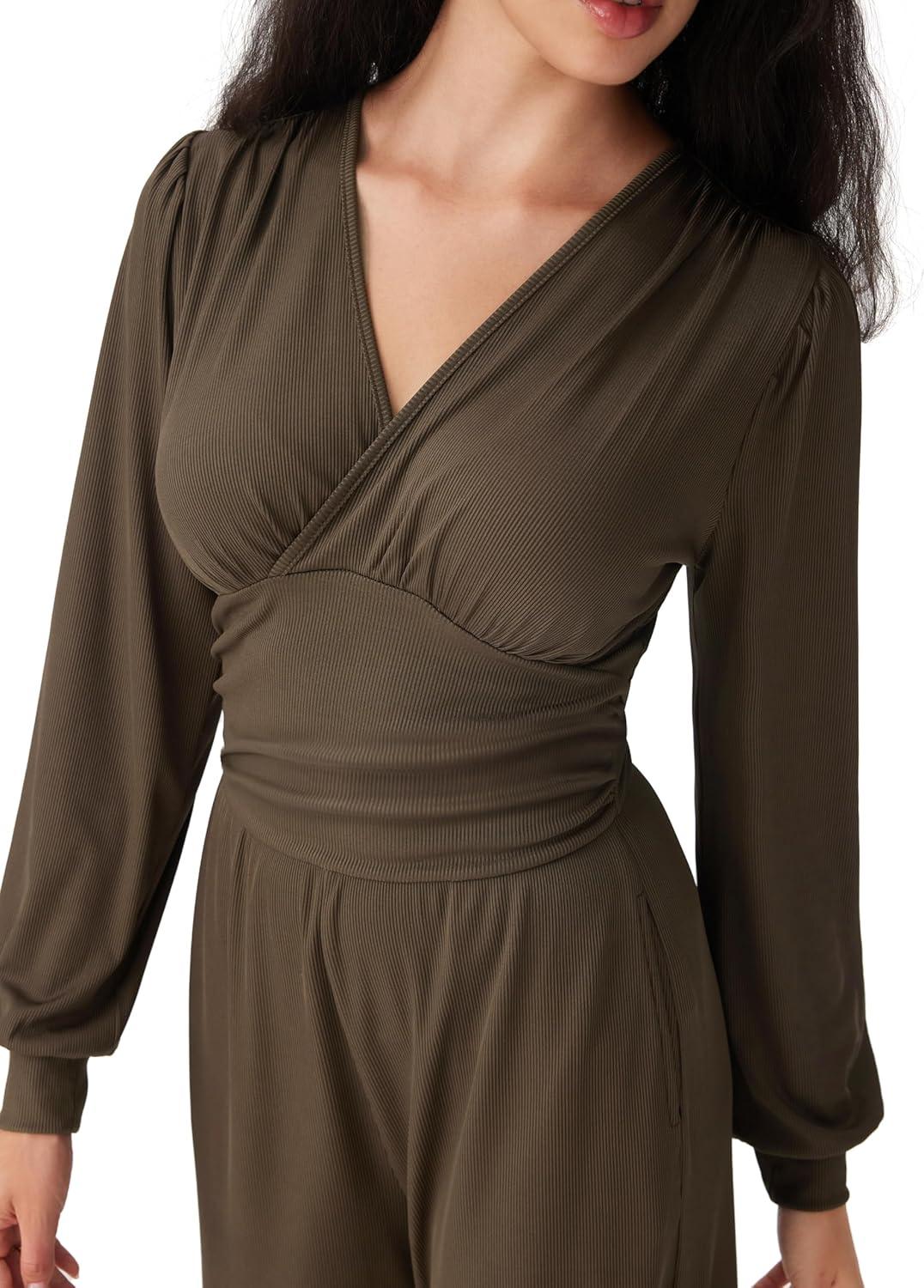
When you walk, the wide legs swing out with each stride, creating a lose, horizontal sweep at the hem that occasionally brushes your shoes. The material moves as a single layer across the thighs, then separates into gentle folds around the knees; at a quick pace those folds spring back and sometimes cling briefly before settling. Your hands find the pockets without much resistance, and the pocket openings make a faint ripple on the hips as you shift weight from one leg to the other.
sitting down alters the silhouette more noticeably. Fabric gathers at the hips and across the pelvis, producing soft creases that run toward the crotch and along the inner thighs. The hem rides up a little on the front of the legs, and you may find yourself smoothing the fabric forward to remove a fold. When you lean—forward to reach somthing or back against a chair—the V-neck opens and closes in response, sometimes revealing a sliver of collarbone as the neckline relaxes; leaning back can tug the shoulder seams slightly, prompting the sleeves to shift up toward the upper arm.
throughout normal wear you’ll notice small, automatic adjustments: a quick tug to realign a seam, a brief smoothing over the thigh, the habit of shifting weight to relieve a crease. Movements that involve twisting or reaching tend to translate into diagonal pulls across the torso, while repeated sitting produces a memory of creases along the leg that linger until the fabric is allowed to hang free again. These behaviors unfold over minutes rather than seconds, giving the garment a lived-in sequence of shapes as you move through a day.
How the jumpsuit lines up with your expectations and the practical limits you encounter
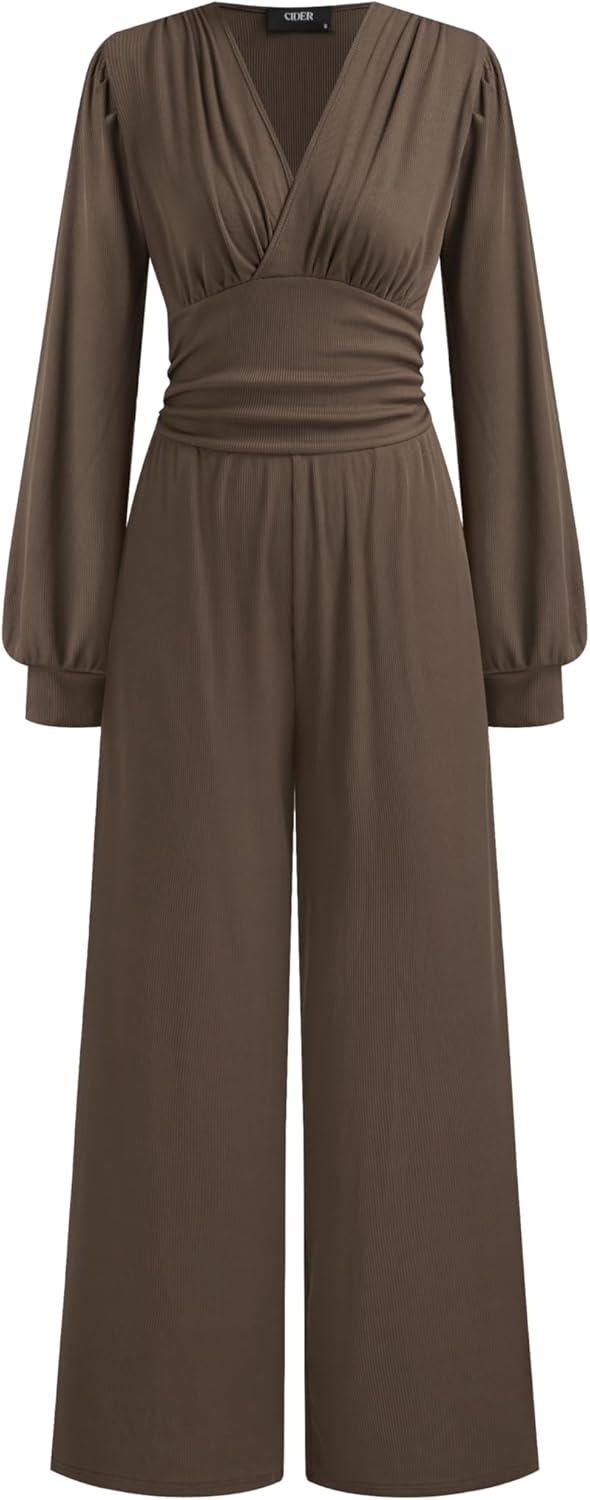
When first put on, the piece settles into a familiar silhouette: the V-neck opens to a predictable depth and the wide legs hang with a relaxed drape. Over the course of a wear period, common micro-adjustments appear — sleeves are nudged into place at the wrists, the fabric over the torso is smoothed after sitting, and the waist seam sometimes migrates a little with movement. These small habits signal that the garment behaves like many one-piece outfits: it looks composed at a glance but invites occasional readjustment during longer wear.
Practical limits become apparent in motion. The deep leg cut creates a roomy stride but can billow or sweep under windy conditions and may require attention when navigating stairs or crowded spaces. Pockets add convenience but introduce a subtle pull on the hip line when loaded, which slightly alters the front fall. The neckline and torso show predictable tension points when reaching or leaning forward, leading to modest gaping or a need to reposition the fabric. Over several hours, the sleeves and side seams tend to shift in ways that prompt smoothing; these are typical, not abrupt, changes that reflect normal use rather than a fixed flaw.
View full specifications and color options
How it wears through a long day or a short date night and where stress shows
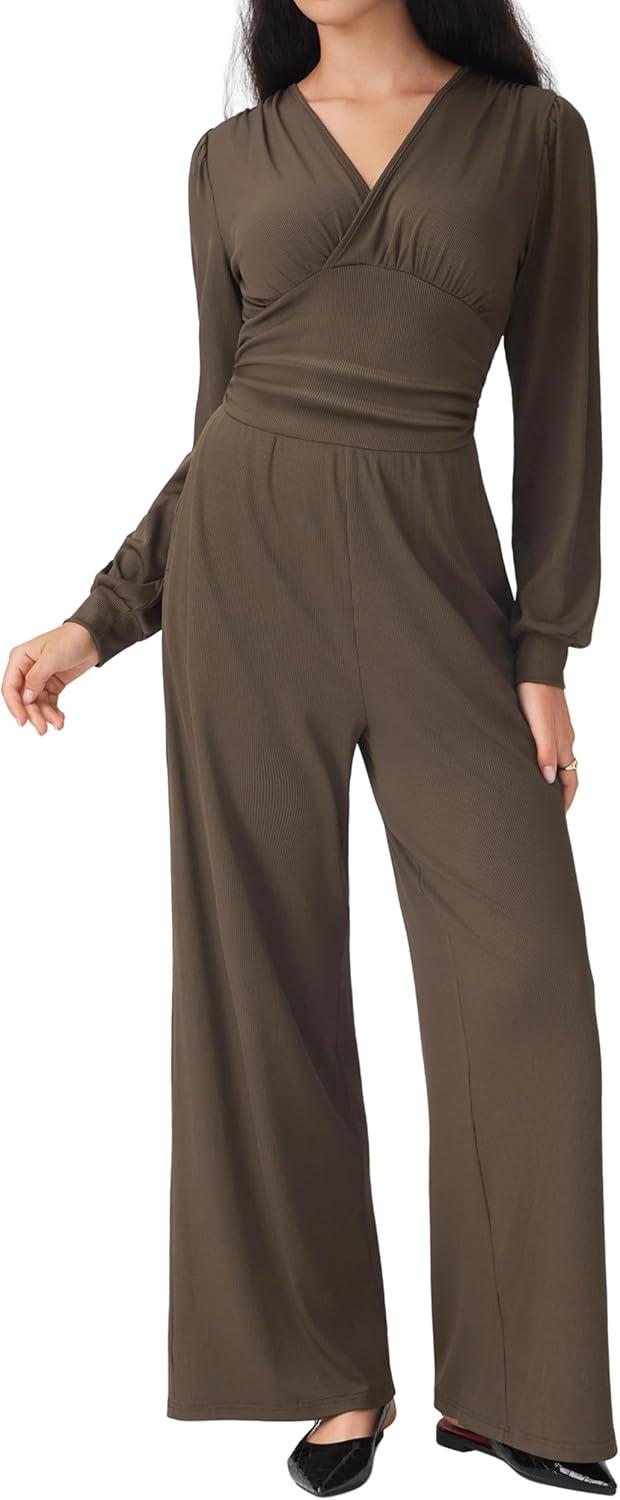
Worn for a short date night, the piece usually keeps a tidy silhouette: the V-neck settles and the wide legs swing rather than cling, and the pockets lie relatively flat when standing. Movement—reaching for a drink or leaning across a table—brings small, unconscious habits into play: sleeves get nudged back, hems are smoothed once or twice, and the front is adjusted to keep the neckline sitting where intended. Pockets can create a soft bulge when seated or when a phone is carried, and the occasional tug at the crotch or side seam happens while crossing legs or stepping up curbs.
Over a long day of commuting,sitting,and intermittent walking,different tensions become more visible. Creasing tends to set at the knees and across the hips after repeated bends, and faint tension lines can appear where the fabric is strained at the crotch and inner thigh. Pocket openings and the seam lines near them show the most consistent stress with use,frequently enough shifting slightly or pulling once a phone or wallet has been carried for a few hours. Sleeves and shoulder seams can migrate upward when arms are raised repeatedly, and a back zipper or center seam may feel the most strain during extended movement. For some wearers, the inner-thigh and underarm areas show mild surface wear after a full day, prompting the occasional smoothing or readjusting of seams and hems rather than a single, intentional alteration.
View full specifications and available sizes/colors
Its Place in everyday Dressing
Over time, you’ll notice the CIDER Jumpsuits for Women Long Sleeve V Neck Wide Leg Dressy Date Night Romper Casual One Piece Outfits with Pockets Trendy slipping into regular rotations rather than standing out. In daily wear it softens and drapes a little looser,and comfort settles so movement becomes part of the background. As it’s worn through regular routines, the fabric shows small signs of living — softened seams and a little give at the bend — that make it feel familiar. It settles into the rotation.

