

At first touch the crepe feels dry and slightly pebbled, with enough substance that it doesn’t cling but still moves with you. This is Dress the Population’s Catalina fit‑and‑flare midi, and when you slip it on the bodice settles into a neat line at the waist while the neckline opens without feeling theatrical. As you walk the skirt swings with controlled volume—the kind of motion that reads composed rather than floaty—and the hem lightly brushes the knee. In daylight the fabric reads matte and grounded; seams sit flat against your shape and the dress keeps it’s form instead of slumping. When you sit it folds evenly rather than ballooning,and the pockets tuck away until you put a hand in,leaving behind that lived‑in ease you notice in the first half hour.
When you first pick up the Catalina midi: immediate shape, weight, and shine you notice
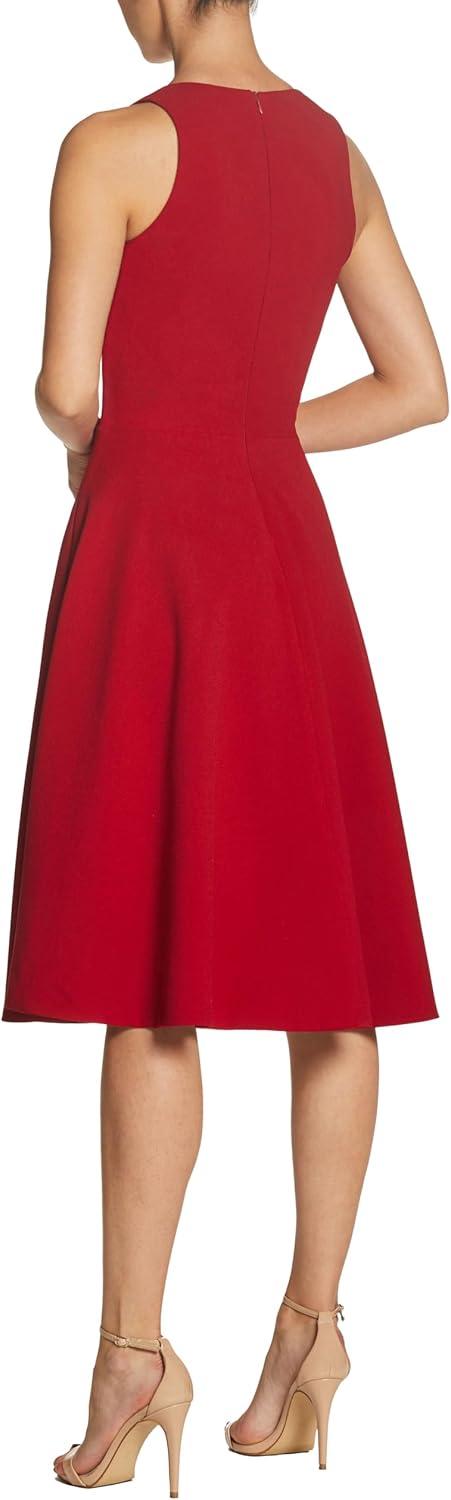
The first thing you notice when you lift the dress and slip it on is the way the cut settles around your torso: the bodice keeps a clean, slightly structured line against your chest while the skirt opens into a soft A‑line that wants to swing away from your hips. As you smooth the fabric over your shoulders you find yourself adjusting the arm openings and nudging the side seams into place—small, unconscious motions that reveal how the garment hangs and how the waistline sits relative to your ribcage. The pockets sit low enough that, when you rest your hands in them, they introduce a faint pull at the hips and change the fall of the skirt in a subtle, predictable way.
Weight is evident the instant you move: the dress has enough heft to feel anchored at the hem,so each step makes the skirt sway rather than flutter. Run a hand across the surface and you’ll notice a muted sheen that catches along the skirt’s folds and the princess seams; it’s not mirror‑luminous but it throws back light on angles and movement. As you turn, the sheen shifts, seams resettle, and the fabric resumes its smooth outline—small moments that make the shape, weight and shine register in real time.
How the fabric sits against your skin and how light plays on the solid color
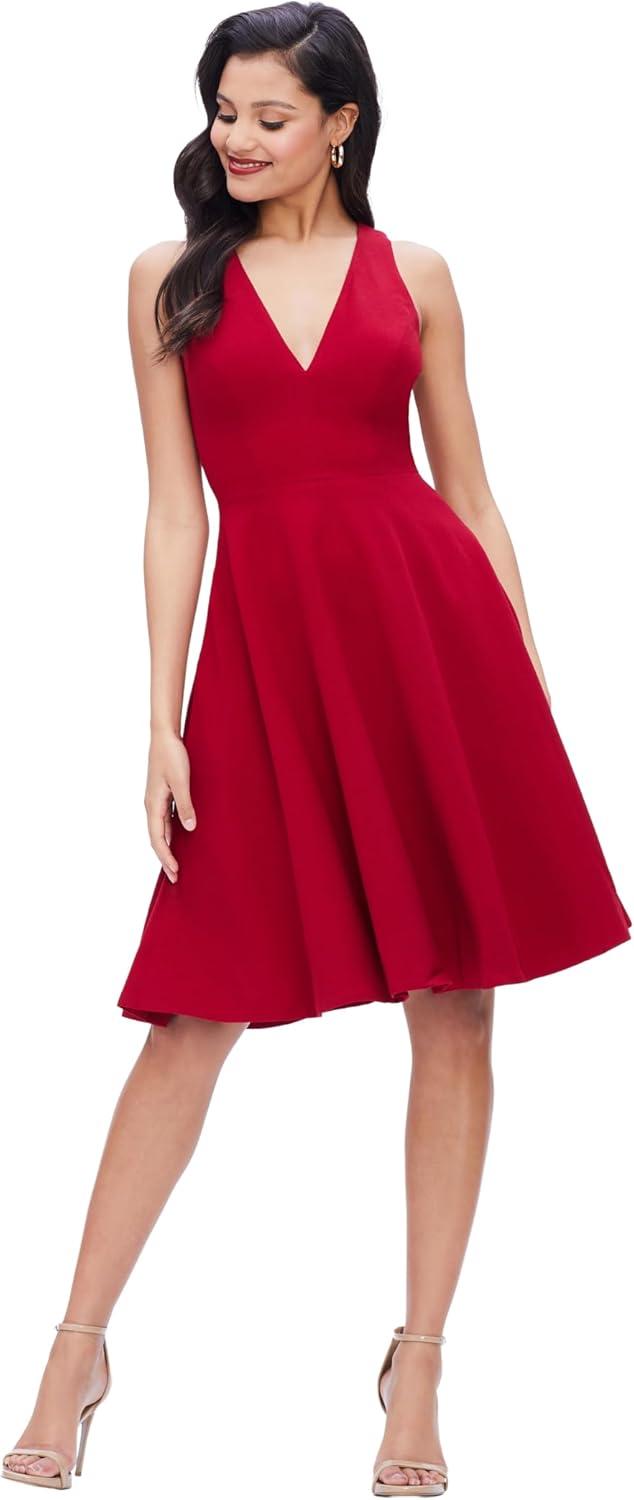
When you first slip into it the fabric settles against your skin with a faint textured resistance rather than sliding like silk; it tends to hug the contours where seams and darts sit and to skim more freely over the flared skirt. You may find yourself smoothing the bodice or brushing at the arm openings without thinking about it — small adjustments that reveal how the material moves with your shoulders and breathes a little when you shift. At the underarm and along the sides it can feel slightly tactile as you raise your arms, and the skirt shifts against your thighs in soft, forgiving folds as you walk.
The solid color reads differently depending on light and motion: under warm indoor bulbs it warms and deepens, while direct daylight flattens and reveals subtle tonal shifts in the folds. Seams, pleats and the flare of the skirt catch light and throw faint highlights along their edges, so pockets and darts create tiny contrasts rather than broad shine. The surface has a directional quality — not glossy, but not completely matte either — so turns and gestures make the hue breathe, throwing small shadowed recesses and soft highlights that change over the course of an outing.
Where the seams,waistline,and skirt meet your proportions and outline your silhouette
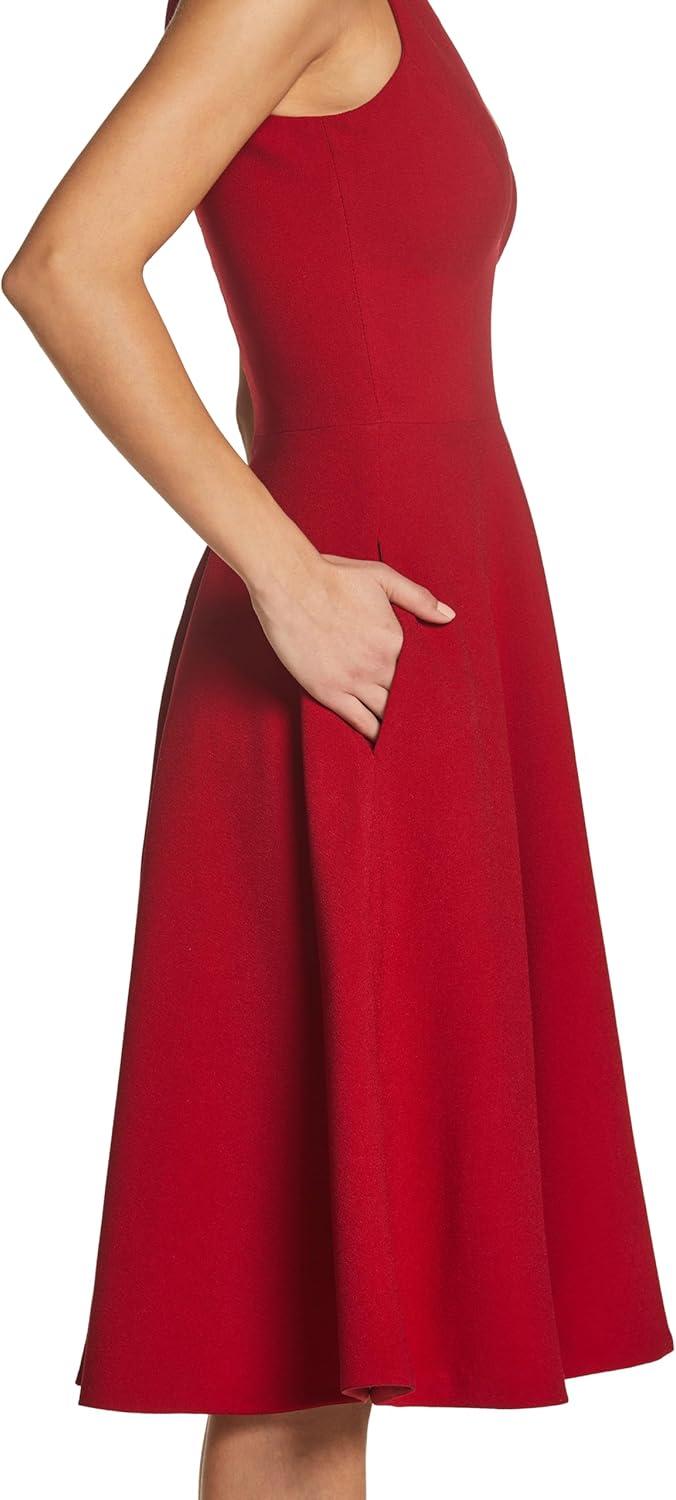
On the body,the dress’s waist seam reads as the primary hinge between torso and skirt: it usually lands near the natural waist on average torsos, though it can ride a touch higher on shorter waists or sit slightly low on longer ones.The seam creates a distinct horizontal break that frames where the bodice stops and the skirt begins, and that junction becomes a focal point when the wearer moves—shifts forward, sits, or leans back—and the fabric there compresses, smooths out, or pulls depending on posture.
Where the skirt’s panels meet the waist seam, the silhouette is shaped more by seam lines than by surface drape. The flare starts from that junction and opens as the wearer walks,causing the skirt to swing and reveal a gently projected outline from hip to hem; pockets and side seams can introduce subtle tensions or puckering at the hips when hands are slipped in or when weight shifts. Over time and across normal movements, seams at the side and thru the skirt can migrate a little with habitual adjustments—smoothing the waist, tugging at the hem—so the silhouette seen standing still is often slightly different from the silhouette in motion.
View full specifications, sizes, and colors
How it moves with you when you walk, sit, and lift your arms
When you move down a sidewalk the skirt reacts with a quiet sway; the A-line cut lets the hem drift away from your legs so it doesn’t snag at each step, and on a quick stride the skirt will flare a little more, brushing around the knee. If you put your hands in the pockets the fabric around the hips puckers and the silhouette becomes slightly straighter, while empty pockets hang flush and don’t billow much as you walk. On stairs or uneven ground the seam lines shift almost imperceptibly,and you may find yourself smoothing the front once or twice as the dress settles.
Sitting compresses the skirt into a gentle fold across your thighs; the flare settles flat across your lap rather than ballooning up, though you might feel the waist seam press a touch when you lean forward. Raising your arms causes small adjustments at the armholes and shoulder seams — the neckline can pull downward or shift laterally depending on how high you lift, and you’ll often reach to straighten the fabric at the bust or smooth the back. Over the course of wearing it, these little tugs and repositions become part of the routine: tucking a stray strap, shifting a pocket, smoothing the skirt after standing — actions that reflect how the dress behaves in everyday motion.
How the Catalina actually performs against what you expect for daily wear
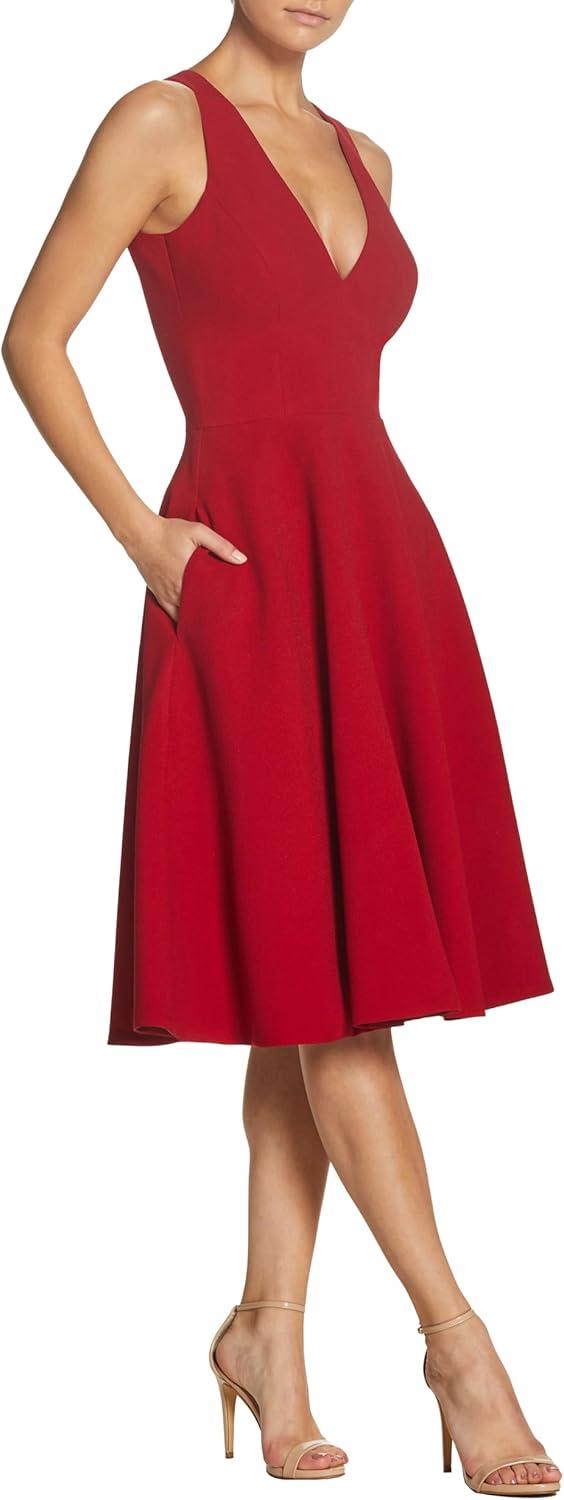
On day-to-day outings it mostly behaves like a dress that was meant to be worn rather than fussed over. The fitted bodice stays in place during short walks and while sitting, and the skirt swings away from the hips so movements like climbing a curb or stepping off a sidewalk rarely feel restricted.The hem does brush the knees on a brisk stride, and the skirt’s motion can prompt the occasional instinct to smooth the front or flatten a seam after sitting. The sleeveless armholes and the open neckline invite small, automatic adjustments (tugging at the chest or shifting a shoulder) after raising arms or reaching into a bag. The built-in pockets accept small items, though putting a phone or keys into them creates a subtle pull at the hip that changes the skirt’s fall.
Over a full day the garment tends to keep a clean outline with only modest signs of wear. Surface creasing appears where the body makes contact — across the lap after long periods of sitting and faintly near straplines where a bag rests — and these soft lines usually relax once standing and walking. the waist seams can shift slightly with repeated movement,leading to another round of smoothing; it’s the kind of minor fidgeting people do without thinking. it holds together through routine activity but shows small, time-based changes in how it sits and moves rather than dramatic distortion.
View full specifications and available sizes
Visible changes you notice after repeated wear and laundering
After a few wears the crepe fabric settles into its own rhythm: the skirt’s flare softens and the silhouette hangs a little more relaxed than when new. You’ll notice faint horizontal creases across the front of the waist and near the hips from sitting and moving, and the places where you habitually smooth the dress — the bodice, the side seams, the top of the skirt — tend to become slightly more compacted, showing a duller surface where the texture has been rubbed flat.
Repeated laundering can make those texture changes more visible. The crepe’s grain may look less crisp along fold lines and at the hem, and small pills sometimes appear at friction points such as under the arms and near the pocket openings. Pockets that were crisp at first can relax and sag a touch when loaded, creating a subtle droop in the skirt panel; likewise, the armhole edges can curl or appear a bit looser after several cycles, prompting the occasional tug to reposition them when you move.
Its Place in Everyday Dressing
At first, the Dress the Population Women’s Catalina Solid Sleeveless Fit & Flare Midi Dress reads like an event piece, but in daily wear it eases into quieter rhythms. As it’s worn in regular routines, the fit relaxes and the fabric softens, so comfort becomes a familiar behavior rather than a question. The aging is subtle — softened creases, a gentle give at seams — and the dress’s presence in the wardrobe shifts toward habit more than notice. Over time, it becomes part of rotation.

