

You step into the Billabong Beach Cruiser Overalls — the off-black wide-leg pair — and the fabric greets you with a soft, slightly cool hand that feels more relaxed than stiff. The cotton‑viscose twill has a midweight drape: the legs hang straight and calm, then gather gently at the ankles when you shift your stance. Seams lie flat across your shoulders and the front buttons settle without tugging, so the fit reads roomy but composed as you sit or reach. there’s a quiet swish when you walk and a pliant give when you bend; small details like the patch pockets and metal plate register by touch more than by sight. In those first minutes wearing them, they feel considered in how they move with you rather than how loudly they announce themselves.
What you notice first about the off black tone and overall silhouette
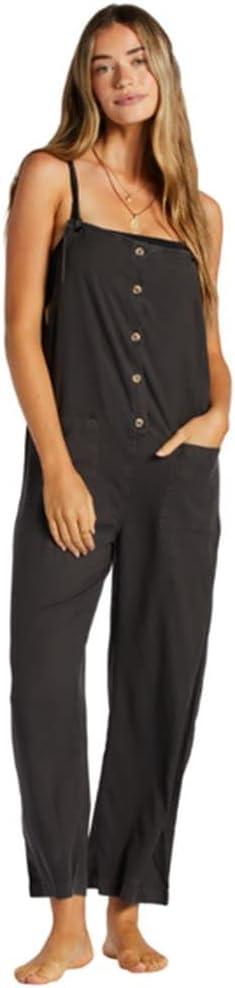
the first thing you register is the color: a muted,off-black that rarely reads as absolute darkness. In indoor light it skews a touch warm, picking up faint charcoal and brownish undertones; outside, especially in sun, the surface reveals subtle variations where seams and stitching catch the light. Up close the tone softens around areas you touch most — the bib edges, pocket openings — so that the overall shade feels lived-in rather than flat. Small highlights form on raised details, while the deeper planes hold a more even, matte depth.
The silhouette announces itself immediately as you move. The bib and straps create a straight, vertical line across the torso, and the body below falls away in a wide, roomy sweep. When you shift your weight or take a step the legs swing freely and the fabric folds into long, soft creases instead of clinging; pockets and buttons introduce tiny breaks in that flow, nudging the front to sit with a gentle, familiar slouch.You find yourself smoothing the hip seams or tugging at a cuff now and then,and those small gestures change how the shape reads from moment to moment — sometimes fuller around the thighs,sometimes closer to a straight column — so the overall outline feels relaxed and quietly variable as you wear it.
How the fabric feels under your palm and the details of the stitching
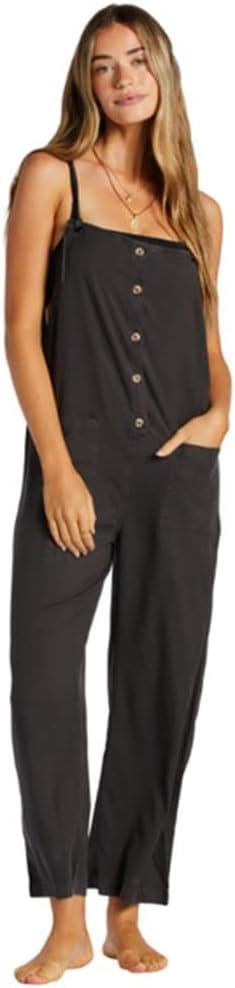
When you lay your palm flat against the fabric, the first impression is of a soft, slightly cool surface that yields just enough to register the twillS diagonal grain beneath your fingertips. As you smooth the strap or press down on a patch pocket, the material slides with a faint, pleasant drag rather than slipping away; the viscose content can make the hand feel a touch silkier than plain cotton, and the weave’s rib shows up as a subtle texture when you move your hand across it. Small unconscious habits — brushing a seam, flicking a pocket lip open, or re-centering a strap — make the fabric shift and drape in a way that highlights its give and recovery over short movements.
The stitching reads as deliberate when you trace it: parallel topstitching runs along the straps and across the pocket openings, and the rows along the button placket are closely spaced and even. Pocket corners and the strap ends show concentrated stitching — short bar-tack clusters rather than loose knots — and the buttonholes are finished with tight, dense stitching that sits flush with the placket.Inside, seam allowances appear to be finished with an overlock stitch so the raw edges stay tucked, and the main seams lie flat against your palm as you press along them, with only the occasional little ripple where the fabric gathers at a join. Over time and movement those stitch lines tend to soften into the overall silhouette, but underhand inspection the workmanship holds a tidy, consistent rhythm.
How the cut sits on your shoulders and the way the legs fall around your calves
When you put them on the straps settle onto the tops of your shoulders with a broad, even pressure rather than a narrow pinch; you might find yourself nudging them into place once or twice after sliding your arms through, an unconscious fix that happens as you shift the bib. The front buttons hold the straps steady, but if you lift your arms or reach forward the straps can move slightly toward the base of the neck, so there’s a small, repeatable tug you notice after a reach or when you bend over. As you stand still the fabric across the upper chest and shoulders lays flat, and as the day goes on you’ll occasionally smooth the edges where the seams meet your skin.
The legs fall into a steady, roomy column around your calves, skimming rather than clinging; when you walk they open just enough to show a soft motion at the hem and then settle back against the lower leg. There’s a gentle billow behind the knee as you take longer strides, and when you pause the fabric tends to stack a little at the back of the calf or press slightly against the shin depending on how you’re standing. Small shifts—crossing one leg, stepping up, crouching—change that drape noticeably, so the way the legs sit feels a bit different after a few movements rather than fixed the whole time.
How it moves with you when you walk, crouch, and reach
When you walk, the legs open and close with each step, creating a soft, rhythmic swish rather than a rigid motion. The hem can skim your ankles or the tops of your shoes depending on stride and surface, and on uneven ground you’ll notice the fabric briefly catch against steps or curbs before settling back into place. As you move, seams glide along your hips and thighs; every few steps you might instinctively smooth a crease or shift a strap without thinking.
Crouching brings the garment’s give into focus: the seat and crotch area pull and then relax as you bend,and you may feel a gentle lift at the back that asks for a swift repositioning. Reaching up draws the torso forward and the straps tauten, which can pull slightly at the front closure and cause the top edge to sit higher against your chest. These small, repeated adjustments—tugging a strap, smoothing a pocket line—are part of how the overalls behave during everyday motions and tend to reoccur depending on how often you change position.
How it measured up to your expectations and the practical limits you found
Worn through a few different days, the garment mostly lived up to the relaxed silhouette promised: it keeps a roomy shape while moving, and the front buttons sit flat against the chest rather than pulling open. The patch pockets hold everyday items without immediately sagging, though a loaded phone and keys create a noticeable bulge that shifts when walking. Straps that were nudged at the beginning of the day tended to settle into a cozy position, then required the occasional readjustment after long periods of sitting or reaching — a small, almost unconscious habit of smoothing the front or tugging a strap back into place emerged over time.
Practical limits appeared in ordinary, repeating moments of wear. Deep bends or crouches produce a slight tug across the crotch seam and a temporary ride-up at the leg openings; standing up from a low seat often revealed new crease lines along the thighs that softened only after moving around.In brisk, on-the-go scenarios the metal plate and button details stayed put without catching, but the front closure can gap slightly when pockets are heavily loaded and the torso is compressed. Overall behavior is consistent: comfortable for long stretches of standing and walking,prone to minor shifting and creasing when engaged in more contorted or heavily loaded activity.
How it looked after a day on sand, errands, and a machine wash
After a day that begins on the sand and drifts through errands, the overalls carry a lived-in look: fine grains tuck into the hem and the stitch channels around the pockets, a faint dusting collects where your hands habitually smooth the bib, and the knees and seat show softened creases from sitting and bending. The patch pockets can appear a touch bulged where a phone or receipts rode along, which pulls subtly at the fabric across the hips. You find yourself tugging at the shoulder straps and smoothing out the front a few times — small, unconscious adjustments that reshape the silhouette as you move.
After the machine wash, most of the loose sand and surface grit is gone, though tiny grains sometimes remain in seam folds and pocket corners. The fabric settles into a slightly more relaxed drape; fold lines at the knees tend to persist as softer impressions rather than disappearing altogether.High-contact areas — the front button placket, pocket edges, and strap attachment points — read a little more mellowed than untouched areas. Hardware stays in place and the pockets retain their profile, while the overall surface can pick up a bit of lint or residual dust in most cycles. you’ll notice straps that were a bit twisted before washing still need a quick smooth-out afterward, and hems lose a bit of their initial crispness but not their length.
How the Piece Settles Into Rotation
The Billabong Beach Cruiser Overalls Off-Black 1 LG, after a handful of mornings and low-key errands, slips into a steadier, unobtrusive presence in the wardrobe. Over time, the fabric softens and the fit eases, comfort behaving less like a first impression and more like a familiar rhythm in daily wear. as it’s worn, seams relax and small fades or scuffs accumulate, marking ordinary use and anchoring the piece in regular routines. It becomes part of rotation.

 Billabong Beach Cruiser Overalls — Off-Black (Large). Lightweight, comfy overalls built for beach days and roaming adventures. See fit, details & buy now. B (short) Shop Billabong Beach Cruiser Overalls in Off-Black (Large): comfy, lightweight beach-ready overalls for roaming adventures. Check fit & photos. C (CTA-focused) Roam freely in Billabong Beach Cruiser Overalls Off-Black (Large). Durable, breathable beach overalls with relaxed fit — view details, size guide & purchase.)