

You pull on XIUMAO’s cowl‑neck satin bridesmaid dress (model XOD060) and the first thing you feel is the cool,polished weight of the fabric sliding against your skin. The cowl falls into soft,natural folds at the collarbone while the bodice settles with a quietly structured ease,seams lying flat as you move. The skirt carries a calm heaviness—enough to keep a clean line as you walk, but it gives when you sit, pooling into supple drapes rather then puffing out. Spaghetti straps rest lightly on your shoulders and the slit parts with your stride, revealing motion more than exposure; small ruching tucks in where the dress follows your curves, a reminder that the silhouette is shaped by movement as much as by cut.
What you notice first about the cowl neck and long, satin silhouette

The first thing you notice is the way the cowl neck falls — a soft cascade of fabric that sketches a shallow, irregular curve across your chest rather than a sharp line. Up close the folds read almost sculptural: highlights gather on the raised edges while the hollows sit in shadow, so the neckline looks different from every angle.When you face someone head-on the drape frames your collarbones; from the side it loosens into a gentle scoop that can shift as you turn.
Paired with the gown’s long satin length, that initial impression stretches into a single, elongated silhouette. As you stand the fabric skims down, catching light in long bands; when you walk the skirt hints at motion, sometimes clinging, sometimes swinging away, and the cowl at the top subtly rearranges itself. You’ll notice small, instinctive gestures — smoothing the neckline after sitting, tugging a strap back into place — moments that reveal how the drape behaves over time rather than as a fixed shape.
how the fabric catches light and what the satin feels like against your skin
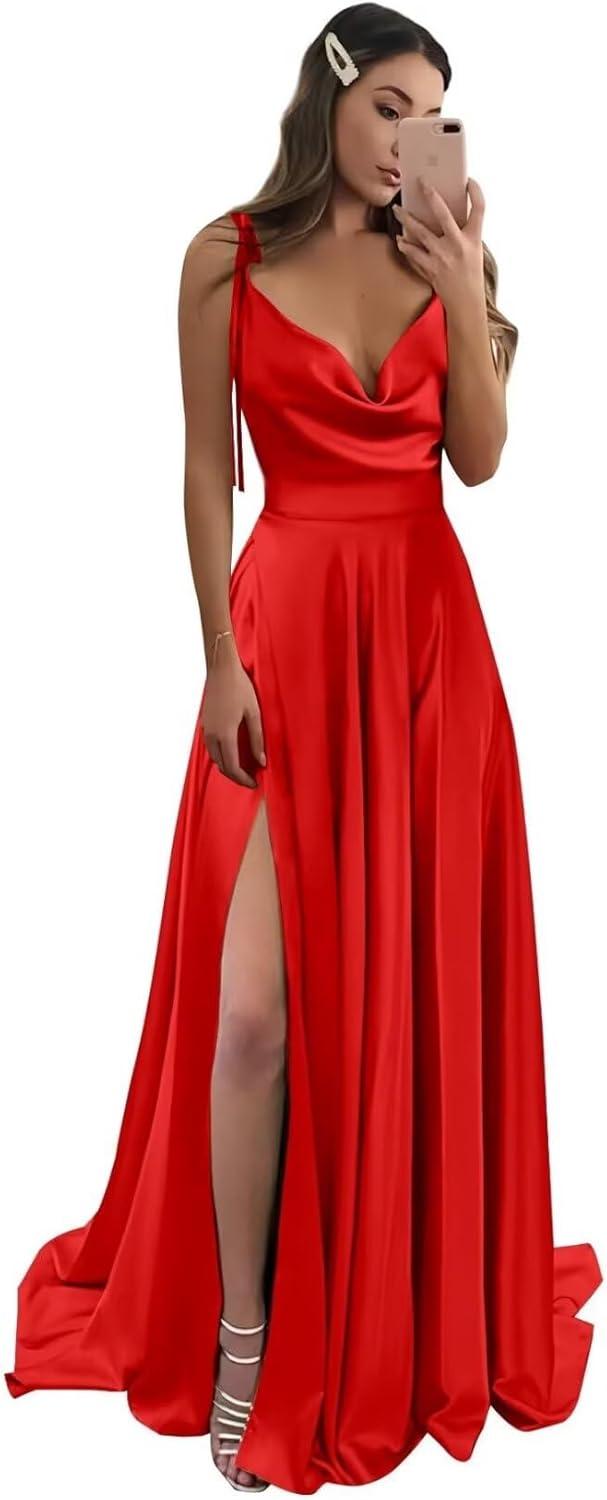
When you first step into light, the satin responds almost promptly: thin ribbons of shine ripple along each fold and curve, catching overhead bulbs and late-afternoon sun in different ways. The surface throws back smooth, directional highlights where the fabric lies flat, while gathered areas scatter that reflection into a softer glow; ruching and tension around seams make some panels look satin-radiant and others more muted as you shift.As you walk, the slit lets the skirt flick so that flashes of sheen travel up and down your leg with each step, and turns or swift movements cause the highlights to leap across the body rather than sit still.
Against your skin the textile feels cool and slick at first and then gradually warms and settles; it can slide softly when you move, prompting the occasional smoothing of the fabric with your hands or a small readjustment at the seams.In stillness it drapes and hugs contours lightly, and in motion you notice a slight change where the fabric meets warmer areas of your body — it tends to cling a touch more in those places. Small, unconscious gestures (smoothing the cowl, shifting the skirt) alter how the light falls, so the visual effect evolves over the course of wear rather than remaining fixed.
Where the spaghetti straps, ruching, and slit shape the dress on your frame
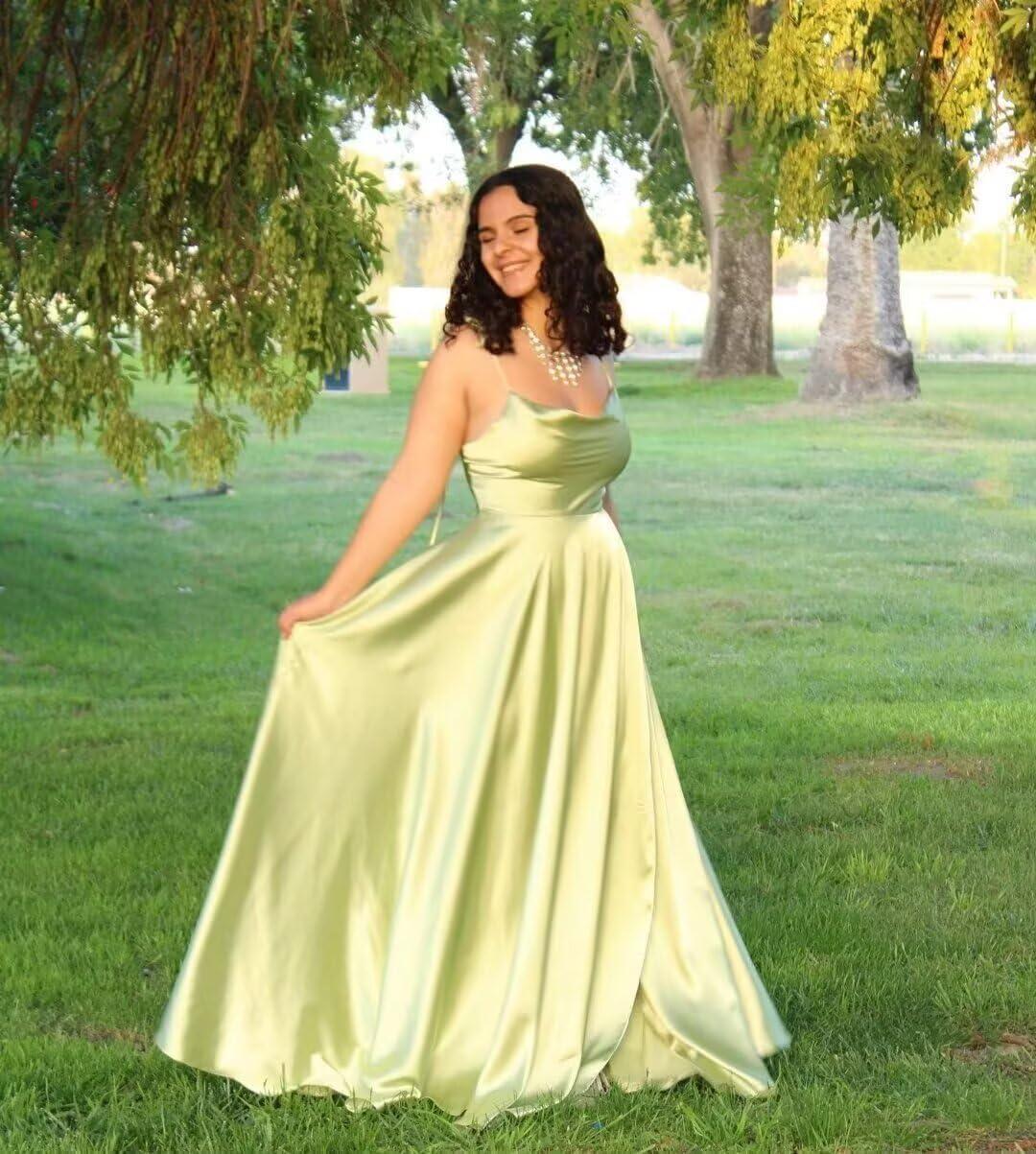
The thin spaghetti straps sit lightly on the shoulders and set the starting point for everything that follows below the neckline. On the move they tend to shift a little inward or outward, so the bodice can feel like it repositions itself with each step; wearers frequently enough find themselves nudging a strap back into place or smoothing the neckline after sitting.Where the straps anchor the top, the shoulder line reads cleaner and the collarbone becomes a subtle focal plane as the rest of the gown settles beneath it.
Ruching across the torso gathers the satin into soft channels that compress and release as the body breathes and turns. the folds scatter highlights and shadow so the midsection reads less flat than a smooth panel — the gathering moves with small habits, like smoothing with a hand or easing a seam when standing up. In motion those ruched lines can migrate slightly, producing small horizontal breaks in the drape that change how the waist and hip meet the skirt.
The slit interrupts the long fall of the skirt and alters the dress’s balance with each stride. It opens progressively when walking, showing glimpses of the leg and allowing the hem to swing with less resistance, and then narrows again when standing; when seated the fabric around the opening may require a quick tuck or a gentle pull to resettle. Taken together, straps, ruching and slit create a shifting silhouette where the upper anchoring, mid‑section texture, and lower movement negotiate space as the wearer moves through a room.
View full specifications, sizes, and color options
How it sits, stretches, and moves with you as you walk or sit
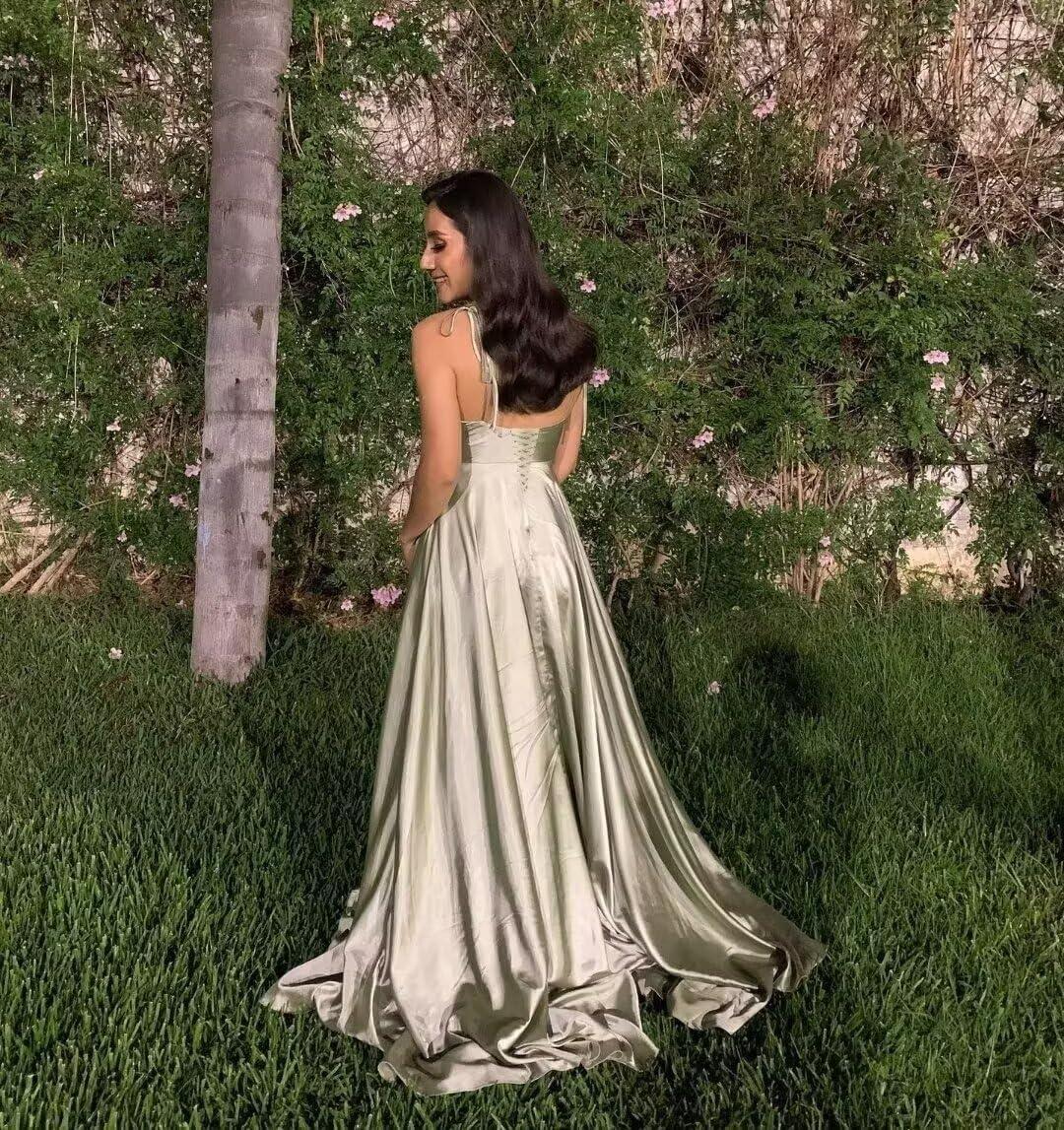
When you stand, the cowl drape falls softly across your chest and the spaghetti straps settle lightly on your shoulders; you may notice yourself nudging a strap now and then as the dress finds its natural resting place. The bodice follows your torso rather than clinging tightly, and the ruched panel smooths into place around your hips as you shift weight from one foot to the other. As you walk, the long skirt swings with a slow, measured rhythm—each step parts the slit, revealing a flash of leg before the fabric settles back into a gentle skim. The floor-length hem brushes the ground on casual steps and lifts enough on a brisker stride to keep the seam clear of your shoes.
Sitting down changes the shape in small, familiar ways: the cowl softens and folds inward, ruching gathers more prominently at the hip, and the satin lies flatter across your thighs. You may find yourself smoothing the skirt forward or adjusting the back lacing so the bodice sits comfortably against the chair; the dress gives slightly where it’s cut on the bias, but most of the accommodation comes from drape rather than stretch. Crossing a leg or shifting to one side opens the slit more decisively, and when you stand again the fabric usually slips back into place with a brief tuck and gentle tug. For some moments the dress will show subtle creases where you leaned or sat; those ease out once you move again.
Where the dress met your expectations and where its limits became apparent
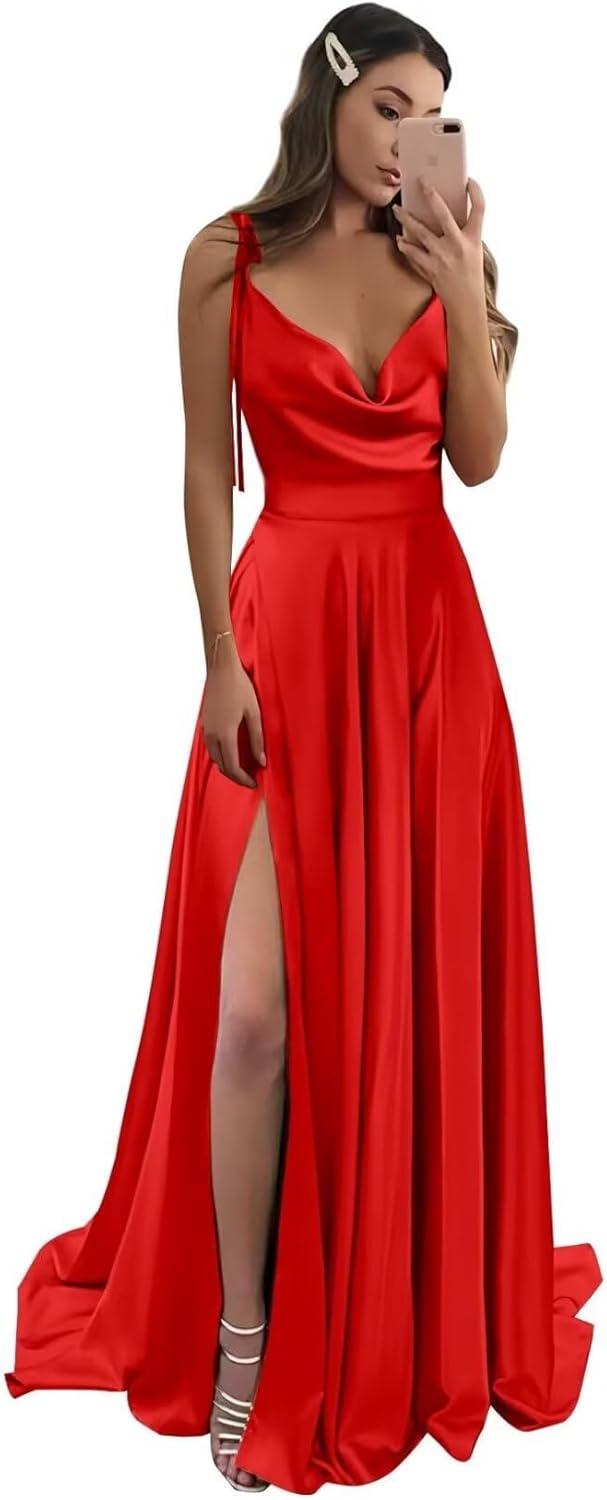
The dress delivers where a graceful drape and longline silhouette were expected: the cowl neck settles into a soft fold across the chest and the bias-cut of the bodice lets the skirt skim the hips as the wearer moves. The slit opens and closes naturally with each step, creating brief flashes of leg that align with walking and turning. Spaghetti straps sit lightly on the shoulders and the ruched panel reads as subtle texture from a short distance, while the sheen of the outer layer catches light in motion, adding a gentle highlight to torso and skirt planes.
Limitations become apparent over time and activity. The cowl can lose its sculpted depth after prolonged sitting, flattening into a less defined channel; the slit, useful for ease of stride, tends to shift position during more animated movement and can expose more of the leg than initially noticed. The smooth outer surface shows creasing where the body bends and, in closer inspection, emphasizes seamlines and any underlying layers. Straps are prone to small adjustments mid-event, and the floor-length hem frequently brushes the ground, picking up dust or requiring the occasional hitch to avoid dragging. These are observed behaviors rather than fixed defects, and they tend to emerge with extended wear and typical event movement.
For full specifications and available sizes and colors, see product details on Amazon.
How the gown held up through an evening of standing, hugging, and dancing

Across the course of an evening—long stretches of standing during the ceremony,a round of congratulatory hugs,then dancing—the gown shows how it behaves in motion and in stillness. While standing for extended periods the fabric settles and drapes lower at the cowl, and small, transient creases appear where the skirt meets the floor; these relax after a few steps. During hugs the shoulder straps occasionally need a quick nudge back into place and the lace-up back compresses slightly but returns without obvious distortion.The ruching around the waist tends to shift a little with repeated hugs and hand placements, prompting the familiar, almost unconscious smoothing motion at the hip.
Once the dancing starts the slit comes into play: it allows freer leg movement and creates gentle flashes of movement down the line of the skirt. at faster turns the hem flicks and the slit opens more noticeably; this can cause the skirt to sway asymmetrically for a few beats before settling. Seams and closures held under the usual motions of swaying and stepping, with no obvious pulling or seam stress during the evening, though the skirt can catch the floor when standing at the edge of a dance floor. In most cases the garment resumes its initial drape after walking or a short pause, and small adjustments—tucking a strap, smoothing the front—become the habitual gestures that accompany the night.

Its Place in Everyday Dressing
The XOD Women’s Cowl Neck Satin Bridesmaid Dress XOD060 slips into the wardrobe as an ordinary guest, noticed more for its steady presence than for any declaration. In daily wear the satin softens where it rubs, the cowl eases into a looser drape, and comfort behaves in small, repeatable ways as it’s worn. In regular routines it folds into familiar habits, turning up on hanger hooks and in outfit decisions with a quiet, becoming familiarity. Over time, it settles.

 truly drapes on you—fit, fabric, real photos and styling tips to pick the perfect bridesmaid look.)