

Light from a cloudy morning highlights the crepe’s matte surface and you feel the fabric settle against your skin before you really move. Adrianna Papell’s Roll Neck Sheath with V Back sits with a quiet, reassuring weight — structured enough to hold the rolled neckline, soft enough to skim your curves. As you walk the skirt swings with a discreet sway; when you sit the material drapes over your lap without tugging at the seams. The rolled collar tucks in close without pinching, and the V at the back shifts subtly as you reach or turn. It feels lived-in from the first wear,the kind of piece that notices how you stand and follows when you move.
When you first lift the roll neck sheath you notice the clean lines and V back
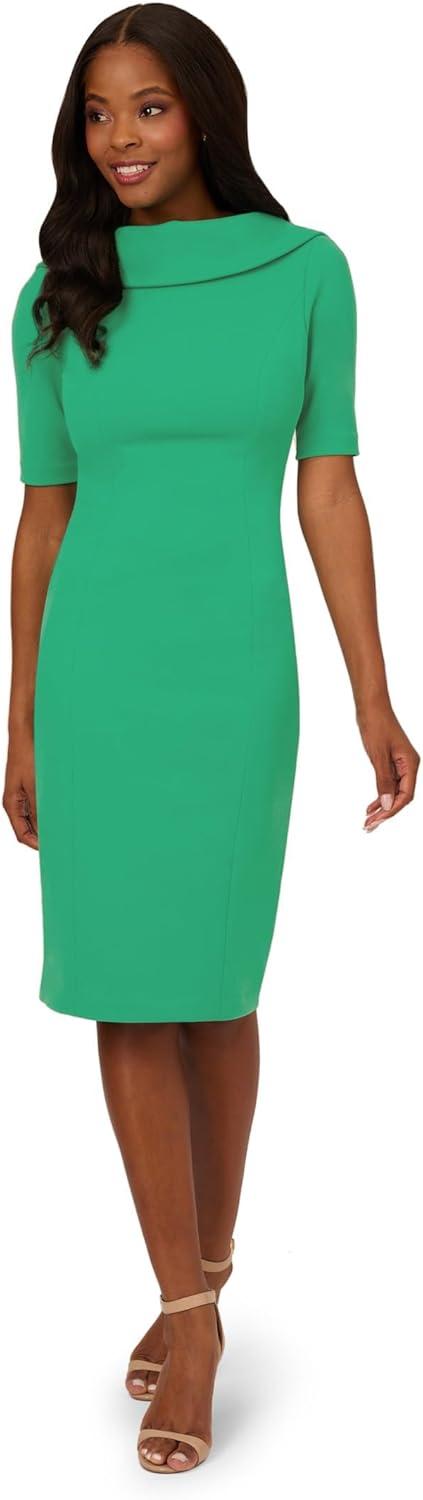
When you lift the sheath to slip it on, the first thing that registers is how the seams and panels fall into straight paths down your body — the clean lines present themselves without fuss. The rolled neckline sits as a soft fold at the throat while the rest of the dress keeps a steady, column-like fall; you find yourself smoothing the shoulder seams and easing the short sleeves into place out of habit as those lines settle.
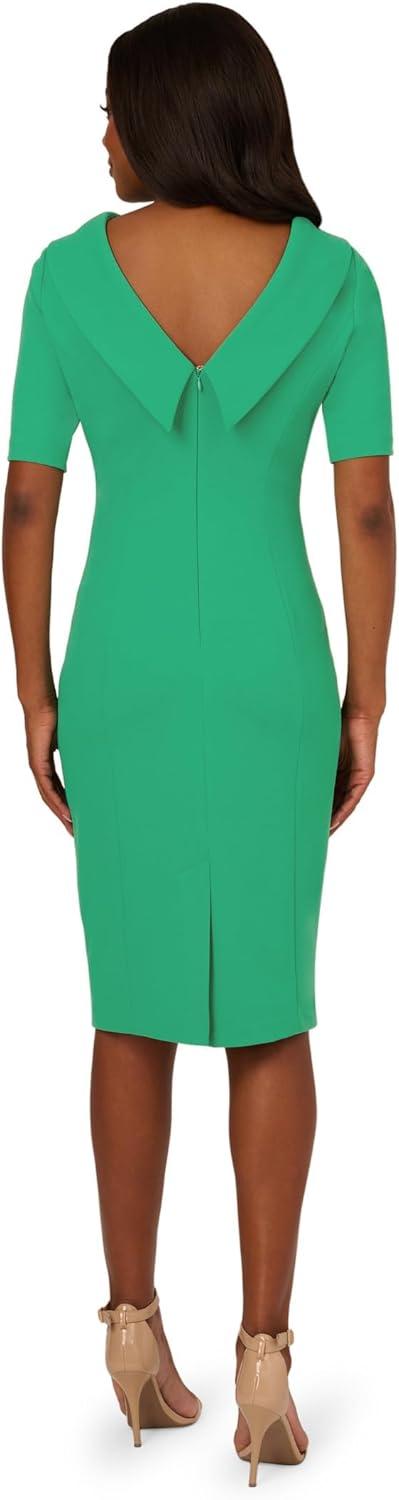
Turning or stretching makes the V back announce itself: a neat inverted point that lands just below the shoulder blades and interrupts the front’s higher neckline. It lays flat against your skin in most positions but can part slightly with movement, so you often nudge the fabric back into place; the contrast between the raised roll at the front and the open V at the rear creates a clear, sculpted silhouette as the dress moves with you.
What the fabric feels like against your skin and the way it drapes
When you slip into the dress the fabric meets your skin with a cool,slightly textured feel rather than slickness; the crepe-like surface gives a subtle tooth that you notice when you smooth a sleeve or run a hand down the skirt. There’s a faint stretch that lets you lift your arms without a sharp tug, and the material shifts with small, unconscious adjustments—smoothing a seam at the shoulder, tugging down the hem after sitting—more than it pulls or fights against you.
As you move, the fabric tends to skim the contours of your body and then fall into a straight, forgiving line so that each step produces a soft sway rather than wide flaring. The roll neck and V back set the top into place, while the rest of the dress hangs in long, even panels that ripple where you bend or cross a leg. Over the course of a day the garment settles and creases where you habitually sit or lean, and it usually relaxes back into its original line with a few gentle tugs.
How the cut sits on your shoulders and traces your waist
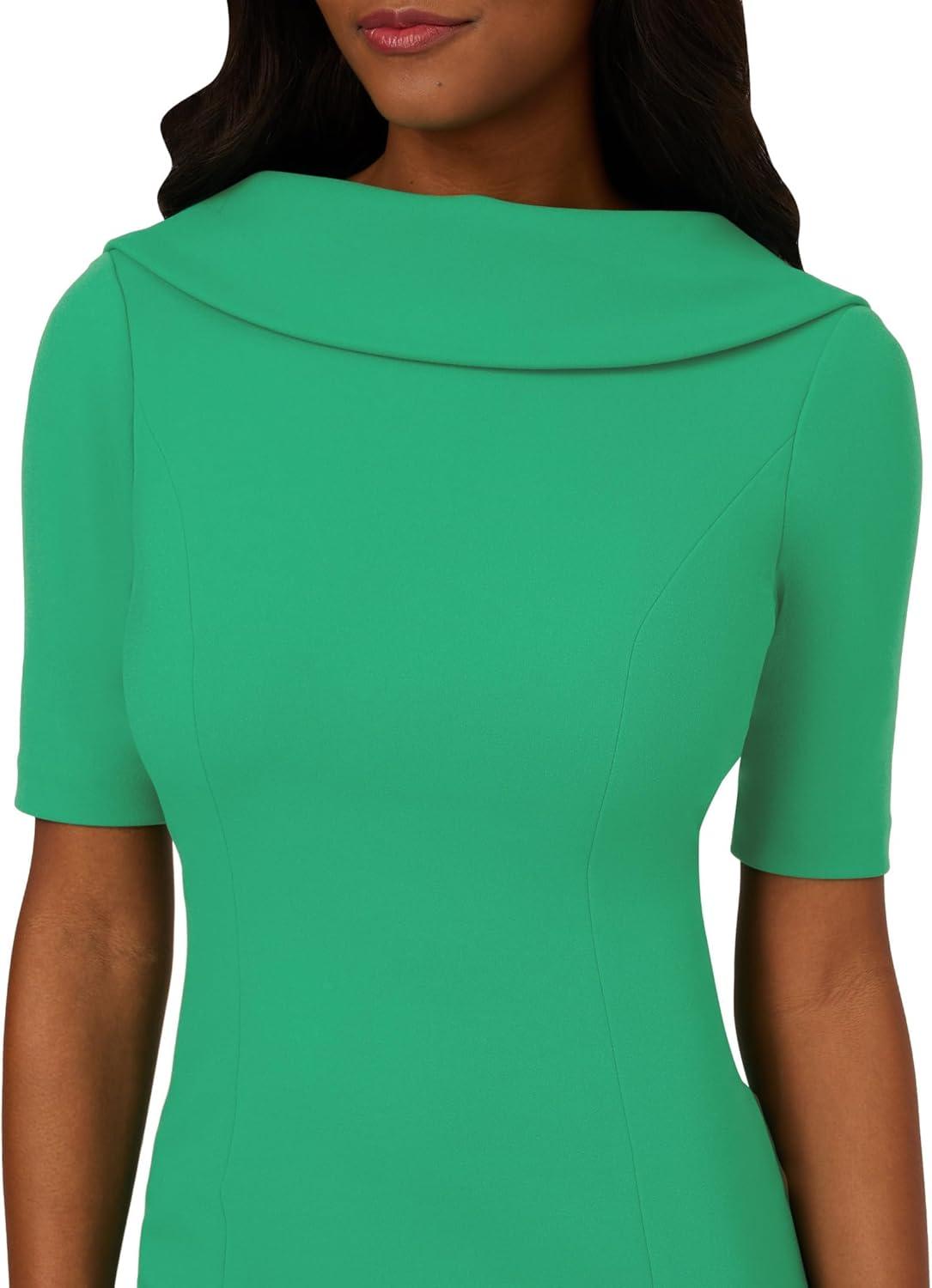
On the shoulders the cut settles into a clean line, the short-sleeve cap meeting the arm without a noticeable overhang. The shoulder seam typically sits near the natural shoulder point, so the sleeve edge follows the curve of the upper arm rather than drooping down the bicep. With movement the fabric shifts a little—occasional smoothing at the sleeve head or a brief tug to re-center a seam is common—yet the silhouette generally keeps the shoulder line neat and uninterrupted.
at the waist the sheath shaping creates a gradual inward sweep rather than a harsh pinched-in waistline. Darts and side seams guide the fabric so that vertical lines fall close to the torso, tracing the waist more by contour than by compression. When standing the dress reads as gently tailored; when sitting or bending the fabric eases and may relax across the stomach and hips, prompting a fast smoothing motion to restore the original line.the cut favors a continuous, streamlined trace from bust to hip while allowing small shifts during normal wear.
How it moves with you in everyday motions, reaching, sitting, walking
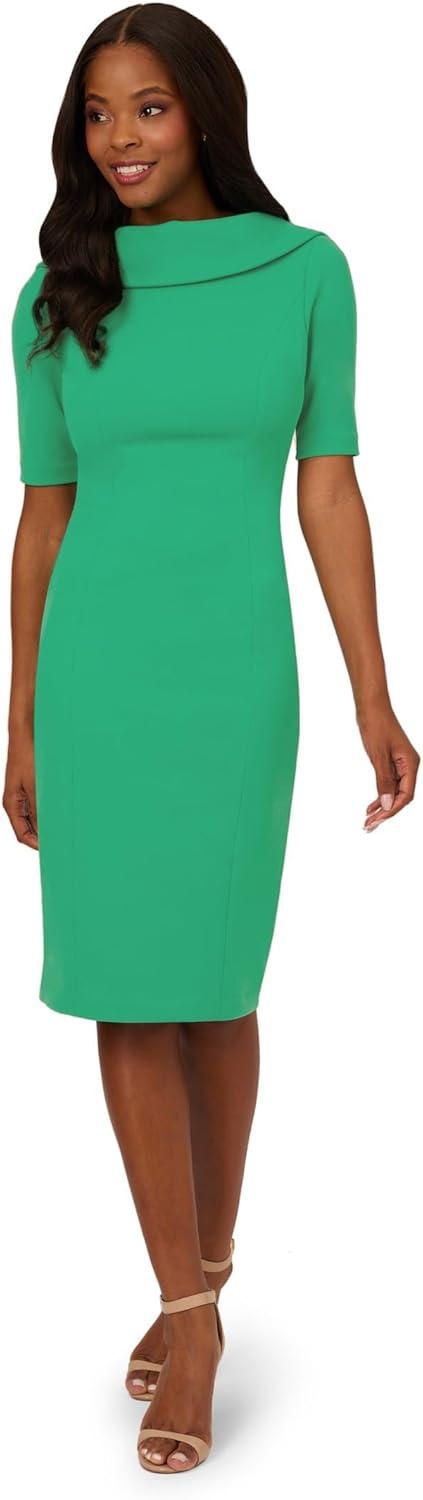
When you reach forward or lift an arm, the short sleeves move up the upper arm and the body follows the motion rather than staying rigid; you can see faint pull lines at the shoulder and across the upper chest on higher reaches.The v-back shifts with your shoulder blades, sometimes opening a little when you lean back, and the neckline tends to sit close as you bend your head. As you walk, the midi length swings with each step and the skirt grazes the calves; on longer strides the front hem can ride up a touch, prompting a quick smooth-down at the thigh.
Sitting brings the fabric to rest across your hips and into soft folds at the lap, and you may find yourself sliding slightly forward in the seat or nudging a side seam to reposition the dress. Small, unconscious habits appear: you pull a sleeve into place, run a hand along the skirt to tame a wrinkle, or tug the back to settle the v-opening. Over the course of a day these little shifts are the most noticeable way the dress adapts to ordinary movements.
Where it met your expectations and where it created practical limits
the dress often behaves as expected thru a typical day: the rolled neckline sits close to the throat and keeps its shape after the first wear, the V-back opens the upper back just enough that the silhouette reads cleaner when standing, and the midi length generally stays put while walking or sitting. During longer stretches of wear the hems and seams settle into a familiar position — occasional smoothing at the neckline and a quick tug at the sleeve hem are common, rather than constant adjustments.Movement across a desk or stepping into a cab tends to redistribute the skirt subtly, so the overall line remains intact even as the garment shifts with normal activity.
Practical limits show up in routine moments. The low back can expose underlayers when leaning forward or reaching, prompting brief repositioning of straps or the garment itself. Short sleeves will creep upward with repeated arm motion, which sometimes invites a small sleeve-smoothing habit. the dress’s straight lines mean there’s little give for carrying small items on the body, and the silhouette can feel restrictive during more animated movement — these tendencies emerge gradually over a few hours rather than instantly, and adjustment is typically minimal but noticeable in active situations.
view full specifications, size and color options on the product page
how it behaved when you wore it through a day and into the evening
Worn from morning meetings into late-evening plans, the dress kept a consistent silhouette: the rolled neckline and v-back stayed in position rather than shifting after movement, and the short sleeves rarely rode up the arm. Sitting for extended periods left soft creases across the lap and at the front of the skirt that smoothed out with a few tugs; reaching or lifting an arm nudged the side seams forward occasionally,prompting a brief,almost automatic smoothing of the fabric at the waist. Movement felt unimpeded, and the garment generally returned to its original lines after walking or standing.
By evening the piece showed normal, subtle signs of use rather than dramatic change. Shoulders and the area around the back-fastening settled a little flatter after hours of wear, and the hem swung differently when moving between indoor and outdoor light. There were moments of small, unconscious adjustments — a quick flattening of the front before standing for photos, or a single tuck at the v-back after leaning — that tended to restore the intended look without fuss. the dress maintained a presentable appearance through the day and into the night, with onyl minor, situational shifts that required brief smoothing for a refreshed finish.
How the Piece Settles Into Rotation
Worn into the week, the Adrianna Papell Womens Roll Neck Sheath with V Back begins to feel less like a new arrival and more like a familiar option. In daily wear the roll neck and sheath silhouette softens at the points of movement,the fabric relaxing and offering a quieter ease that shows itself more than it shouts. As its worn across regular routines, it slips into brief habits — mornings note how the collar settles, evenings notice the softened drape.Over time, it settles into the rotation.

)